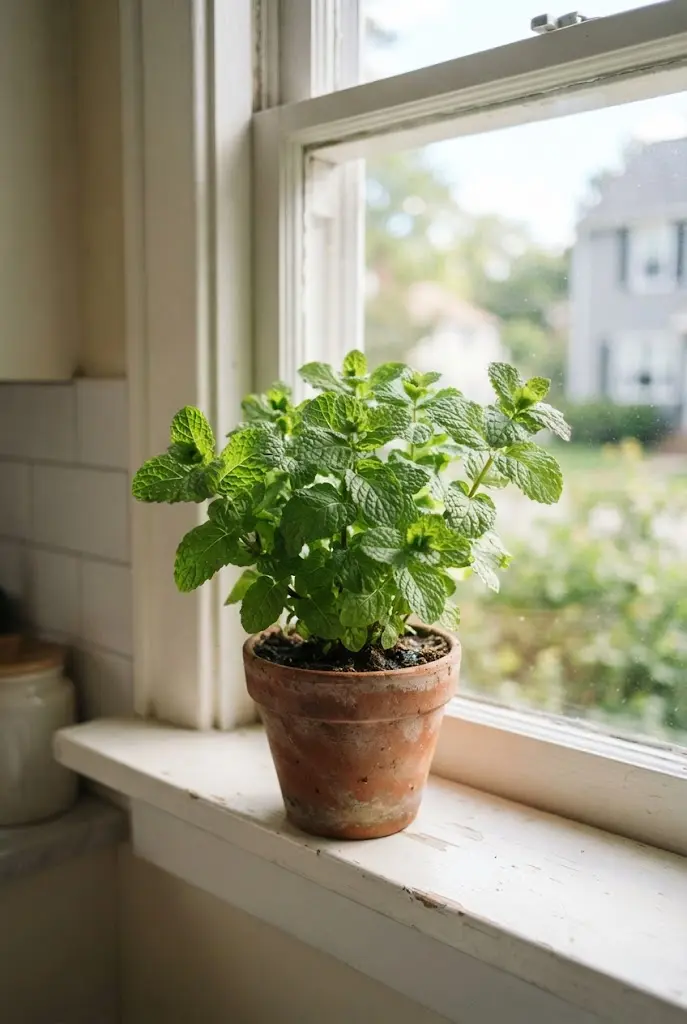
34 Specific Ways to Arrange a Plant Corner in Your Home
Description
A well-arranged plant corner can bring freshness, color, and natural beauty into any home.
From small apartments to spacious American homes, plants can fit into almost any room.
You can create a plant corner in a living room, bedroom, entryway, kitchen, or home office.
Using shelves, plant stands, baskets, and hanging planters helps make the most of available space.
The right arrangement can also make an empty corner feel warm and inviting.
Below are 34 practical plant corner ideas that work well for different home styles and spaces across the USA.
1. Create a Simple Living Room Plant Corner

A living room corner is one of the easiest places to create a beautiful plant display. Choose one tall floor plant as the main focal point and add two or three smaller plants nearby. Use plants with different heights to create a layered appearance. A woven basket can make a basic nursery pot look more decorative. Keep the arrangement close to a bright window if the plants need natural light. Leave enough walking space around the display. Neutral-colored pots work well with modern American interiors. You can also add a small wooden stool for extra height. Avoid overcrowding the corner with too many plants. The goal is to create a relaxed and natural-looking space.
2. Arrange Plants Beside a Bright Window
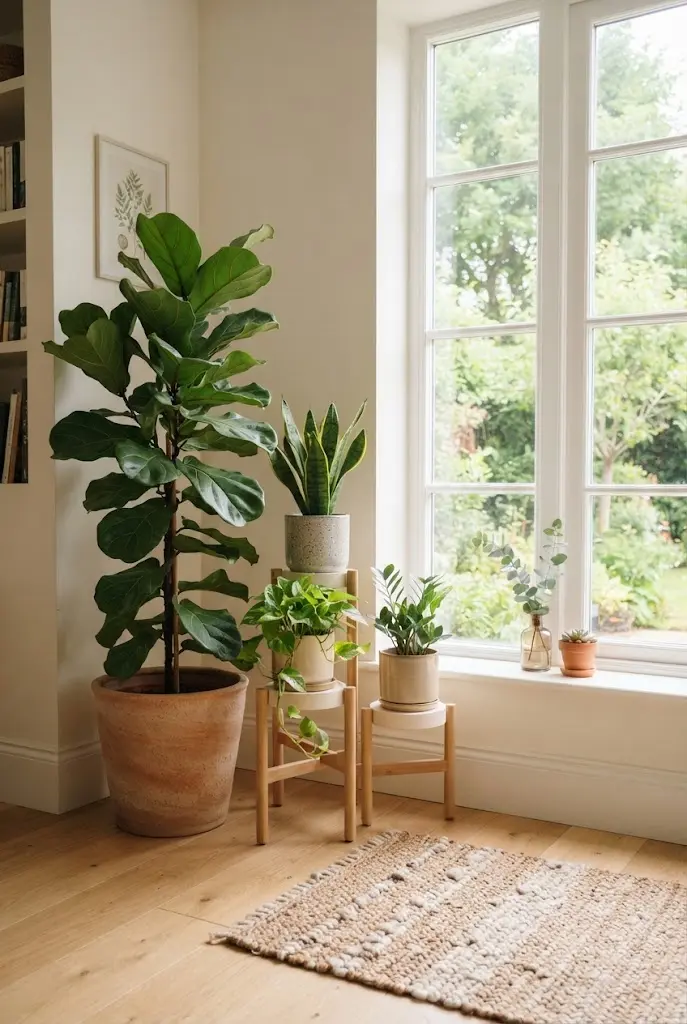
A bright window can become the natural center of a plant corner. Place plants according to their light requirements rather than simply filling the available space. Tall plants can stand on the floor while smaller varieties sit on low stands. Use plants with different leaf shapes to make the display more interesting. A simple ceramic pot can give the corner a clean appearance. Keep plants slightly away from glass if direct sunlight could damage their leaves. A small rug can visually define the area. This setup works especially well in living rooms and bedrooms. Avoid placing plants where curtains constantly rub against them. A carefully planned window corner can feel fresh throughout the year.
3. Use a Wooden Plant Ladder
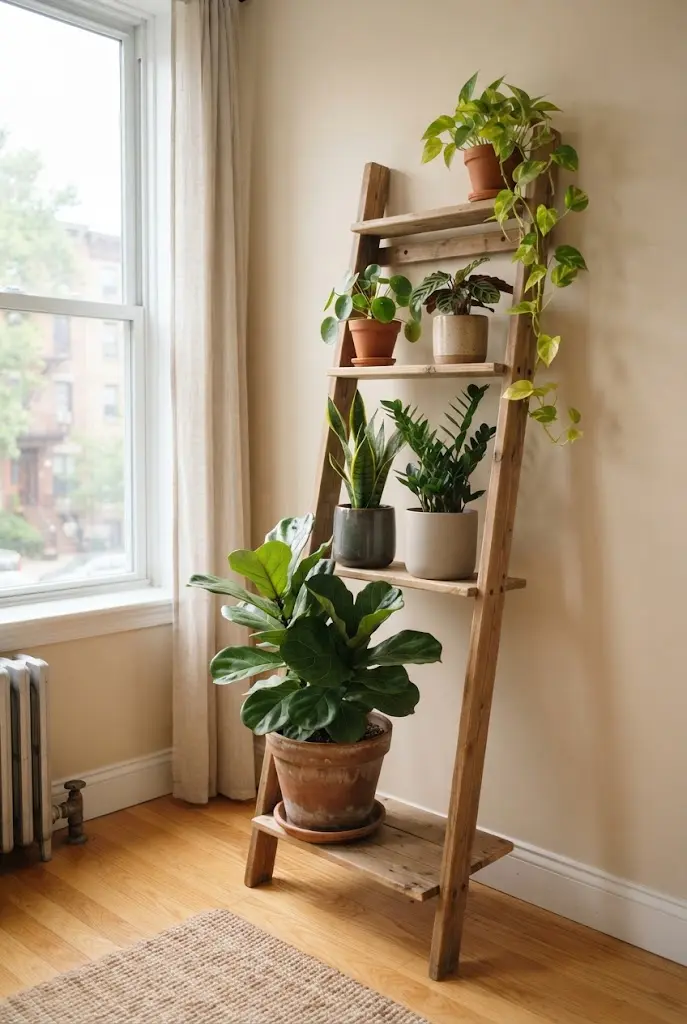
A wooden ladder shelf is a practical way to arrange several plants vertically. Place larger plants on the lower levels and smaller ones higher up. This arrangement saves floor space while giving the corner a decorative focal point. Choose a ladder with wide shelves that can safely hold plant pots. Terracotta, ceramic, and neutral-colored containers can create a coordinated appearance. Leave some shelves empty so the display does not look crowded. A trailing plant can hang naturally from one of the upper levels. This idea works particularly well in apartments and smaller homes. Position the ladder where the plants receive suitable light. Secure the ladder properly if necessary for household safety.
4. Build a Small Plant Shelf Wall
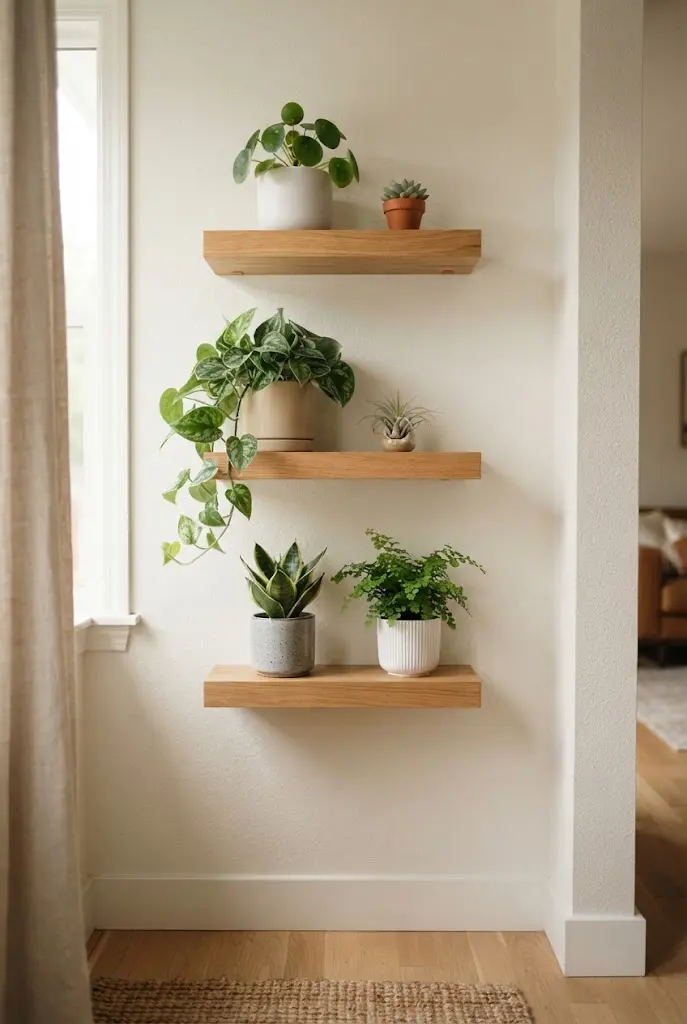
A narrow wall shelf can turn an unused corner into a compact plant display. Install two or three floating shelves at different heights. Place small plants in lightweight decorative pots on the shelves. Keep enough space between each plant so the leaves do not overlap excessively. A trailing variety can soften the straight lines of the shelves. Use matching or complementary pot colors for a more organized appearance. This setup is useful when floor space is limited. Make sure the shelves are securely installed and suitable for the weight of the pots. Choose plants that fit the available light. A small shelf wall can add greenery without taking over the room.
5. Place Plants Around a Reading Chair

A reading chair can become the centerpiece of a relaxing plant corner. Place a tall plant beside the chair and smaller plants on a nearby stool or side table. Choose leafy varieties that create a calm atmosphere without blocking the chair. A floor lamp can provide additional visual interest while keeping the arrangement functional. Use a small rug to connect the different elements. Make sure the plants do not interfere with the chair or walking path. Natural wood and woven baskets can add warmth to the corner. This arrangement works well in living rooms, bedrooms, and home libraries. Keep frequently used areas easy to access. The result should feel comfortable rather than overly decorated.
6. Create a Boho Plant Corner
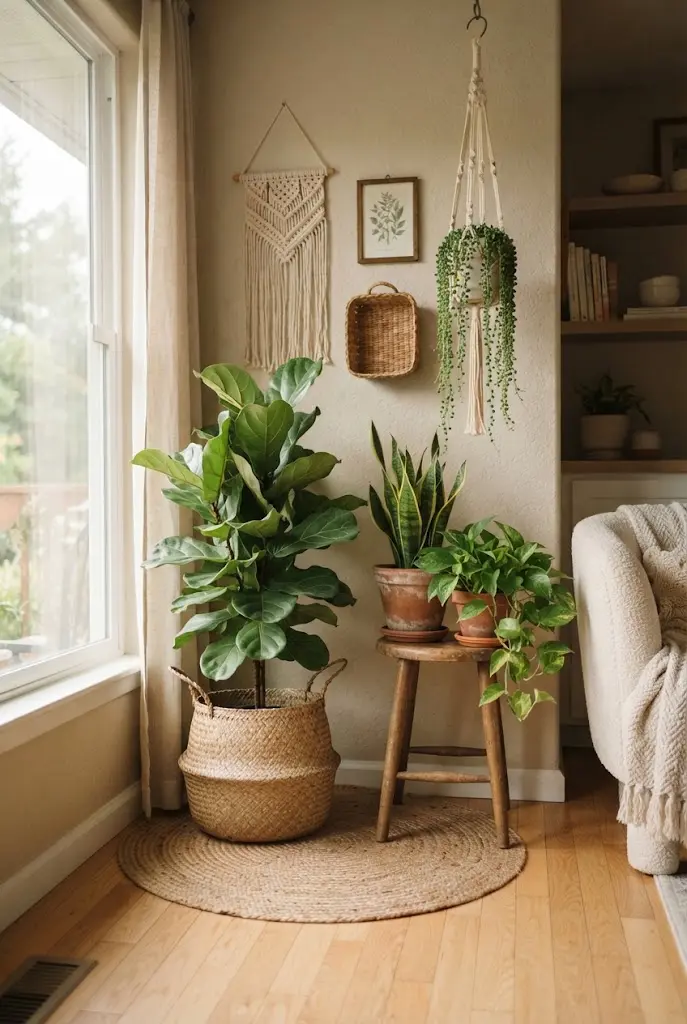
A boho plant corner can combine greenery with natural textures and warm materials. Use woven baskets, macramé hangers, wooden stools, and terracotta pots. Mix plants with different leaf sizes to create visual variety. Place the tallest plant on the floor and smaller plants at different heights. A trailing plant can add movement to the arrangement. Keep the color palette focused on green, beige, cream, brown, and natural wood. Avoid adding too many decorative objects. The plants should remain the main feature. This style works beautifully in relaxed American living spaces. Soft natural light can make the corner feel especially inviting.
7. Use Matching Plant Stands
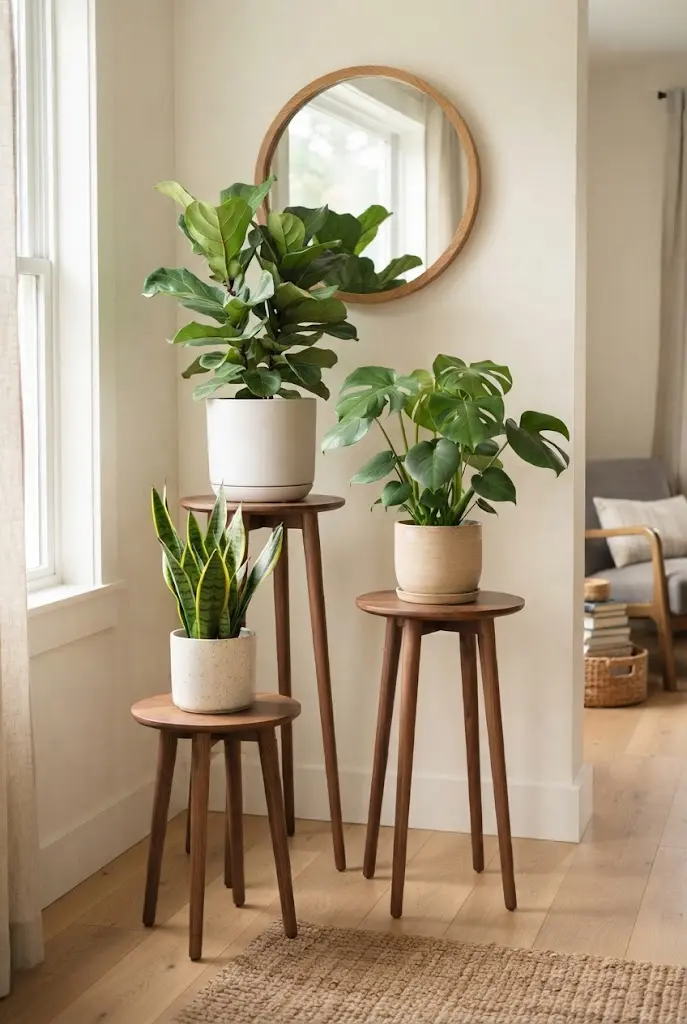
Matching plant stands can give a corner a clean and coordinated appearance. Choose two or three stands in the same material and color. Place plants of different heights on them to create a balanced arrangement. Ceramic pots can complement the stands without competing for attention. Keep the tallest plant toward the back and smaller ones toward the front. This arrangement works well in contemporary American interiors. Avoid placing all plants at exactly the same height. Make sure each stand is stable and strong enough for its pot. Leave some open floor around the arrangement. Matching stands provide structure while allowing the plants to remain the focus.
8. Turn an Empty Entryway Corner Into a Green Display
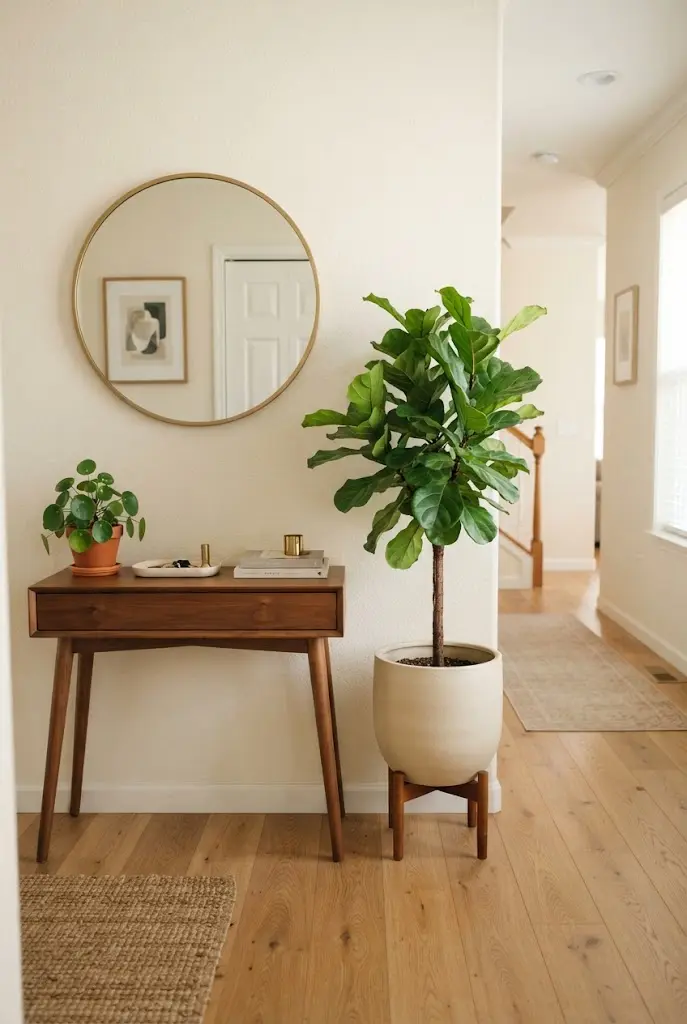
An empty entryway corner can become a welcoming plant display. Start with one medium or tall plant that fits the available space. Add a small plant on a narrow console or pedestal if room allows. Choose containers that match the home’s entryway style. Avoid plants with wide leaves that block the walking path. A mirror placed nearby can make the corner feel larger. Use plants that tolerate the available light conditions. Keep the arrangement simple because entryways are high-traffic areas. Make sure pots are stable and difficult to knock over. This setup can make the entrance feel more natural and inviting.
9. Make a Bedroom Plant Corner
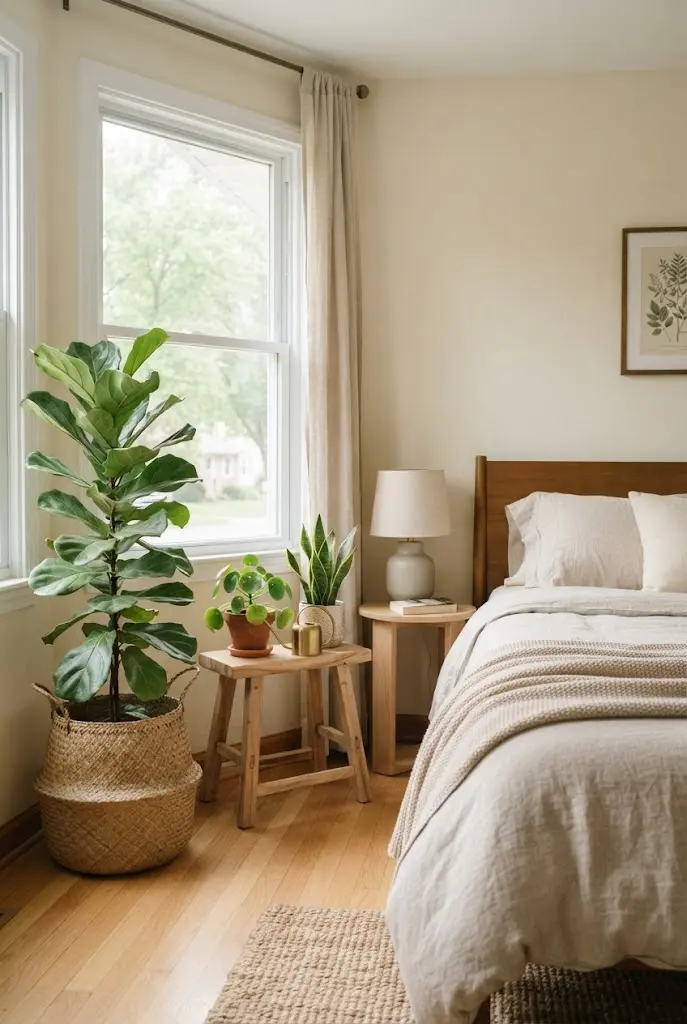
A bedroom plant corner can create a calm and natural atmosphere. Choose plants with shapes and sizes that suit the room without making it feel crowded. A tall plant can sit beside a dresser or near a window. Add one or two small plants on a wooden stool. Use soft-colored pots to complement bedding and furniture. Keep the plants away from areas where they could easily be knocked over. Select varieties according to the bedroom’s light levels. Avoid placing plants where they obstruct heating or cooling vents. A small basket can hide an unattractive nursery container. With a few carefully chosen plants, an unused bedroom corner can feel much more welcoming.
10. Arrange Plants on a Corner Bench

A corner bench can provide a useful surface for displaying smaller plants. Place several compact pots along the bench while keeping enough space for comfortable seating. Add one taller plant beside the bench to create height. Choose pots that share a similar color palette. Trailing plants can gently fall over the edge for a softer look. This idea works especially well in breakfast areas, bedrooms, and sunrooms. Avoid placing heavy pots where people regularly sit or lean. Use lightweight containers when possible. Keep the arrangement visually balanced rather than filling every inch. A plant-covered bench can become both decorative and practical.
11. Use a Tall Floor Plant as the Main Feature

Sometimes one large plant is enough to transform an empty corner. Choose a tall indoor plant with an attractive upright or spreading shape. Place it in a large decorative basket or ceramic planter. Position the plant where it can receive appropriate natural light. Keep surrounding furniture simple so the plant remains the focal point. A small rug underneath can visually anchor the display. This approach is excellent for minimalist homes. Avoid adding several small plants if the corner already feels complete. Make sure the large container is stable. Leave adequate clearance around the leaves. A single statement plant can create a polished and uncluttered appearance.
12. Mix Floor Plants With Small Table Plants

Combining floor plants and table plants creates useful visual layers. Start with one tall plant on the floor as the anchor. Add smaller plants on a side table, stool, or narrow shelf. Choose different leaf shapes to make the display more dynamic. Keep the tallest plant toward the back of the corner. Place smaller plants closer to the front. Similar pot colors can help connect the different levels. This arrangement works in many American home styles. Avoid using plants that all grow at the same height. Leave enough open space for the leaves to spread naturally. A layered arrangement can make a simple corner look thoughtfully designed.
13. Create a Minimalist Green Corner
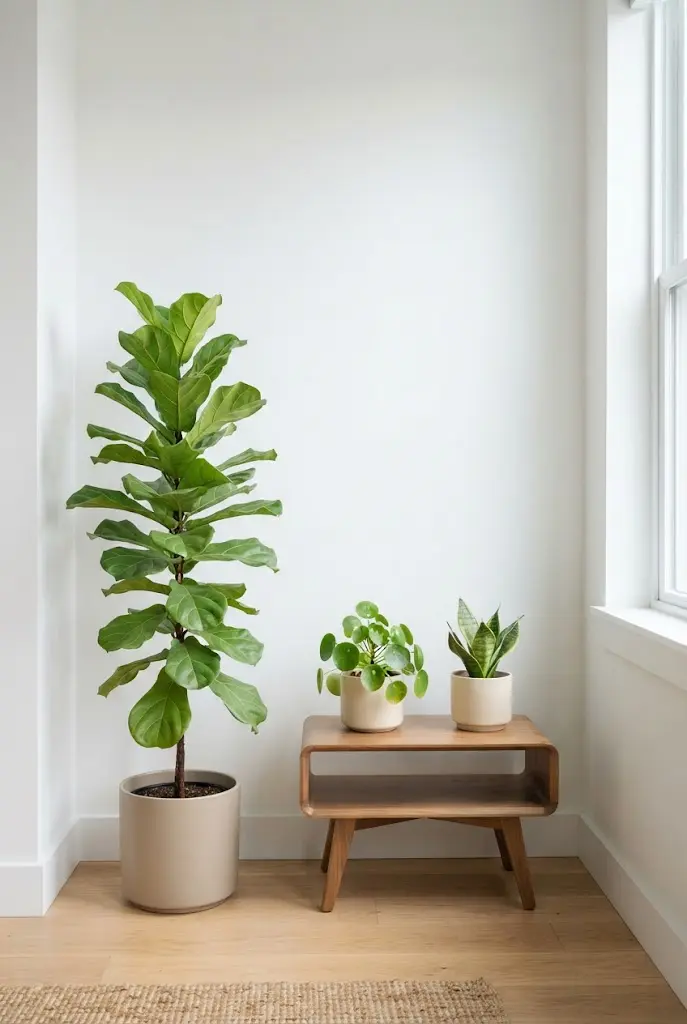
A minimalist plant corner focuses on a few carefully selected plants. Choose one large plant and one or two smaller varieties rather than filling the entire area. Use simple white, gray, beige, or natural-colored pots. Keep furniture and accessories to a minimum. Position the plants so their shapes have room to stand out. A plain wall can provide a clean background. Natural light will help the greenery become the visual focus. This style is suitable for modern apartments and contemporary homes. Avoid mixing too many pot styles. Keep the floor area neat and open. The finished corner should look intentional, peaceful, and uncluttered.
14. Add a Hanging Plant Above a Floor Plant
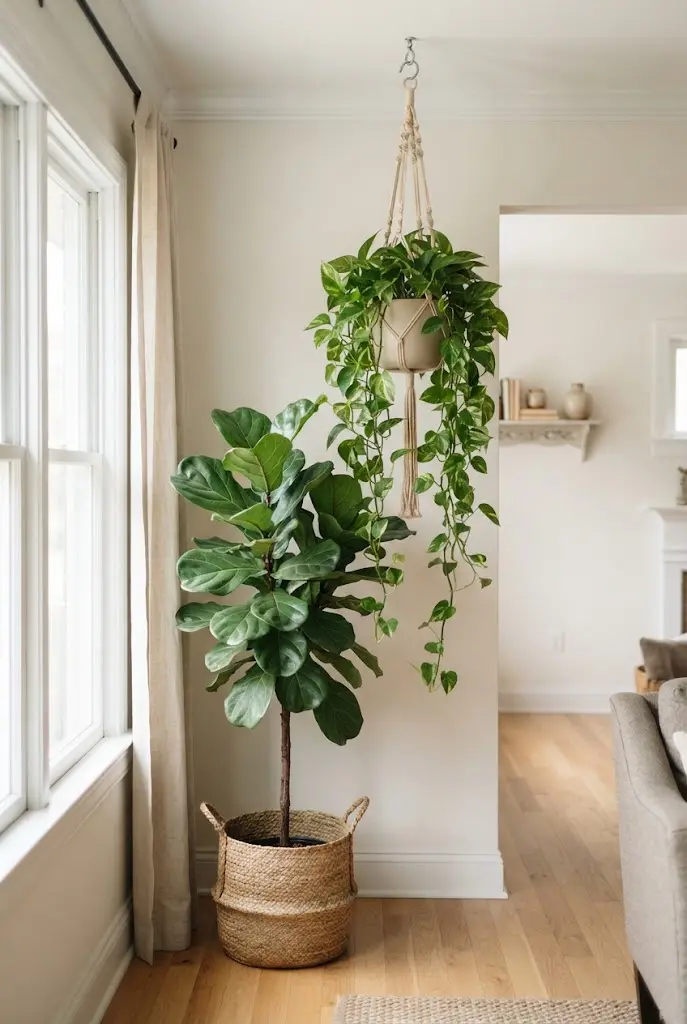
Using vertical space can make a plant corner more interesting. Place a medium or tall plant on the floor and hang a trailing plant above it. The two plants create a natural connection between different heights. Use a simple ceiling hanger that securely supports the pot. Keep the hanging plant away from doors and walking paths. Choose a trailing variety that naturally grows downward. Matching or complementary pots can make the display feel cohesive. This arrangement is especially useful in small homes. Make sure the ceiling fixture is properly installed. Avoid placing hanging plants where they could become a hazard. The result adds greenery without requiring much floor space.
15. Style a Plant Corner With Baskets
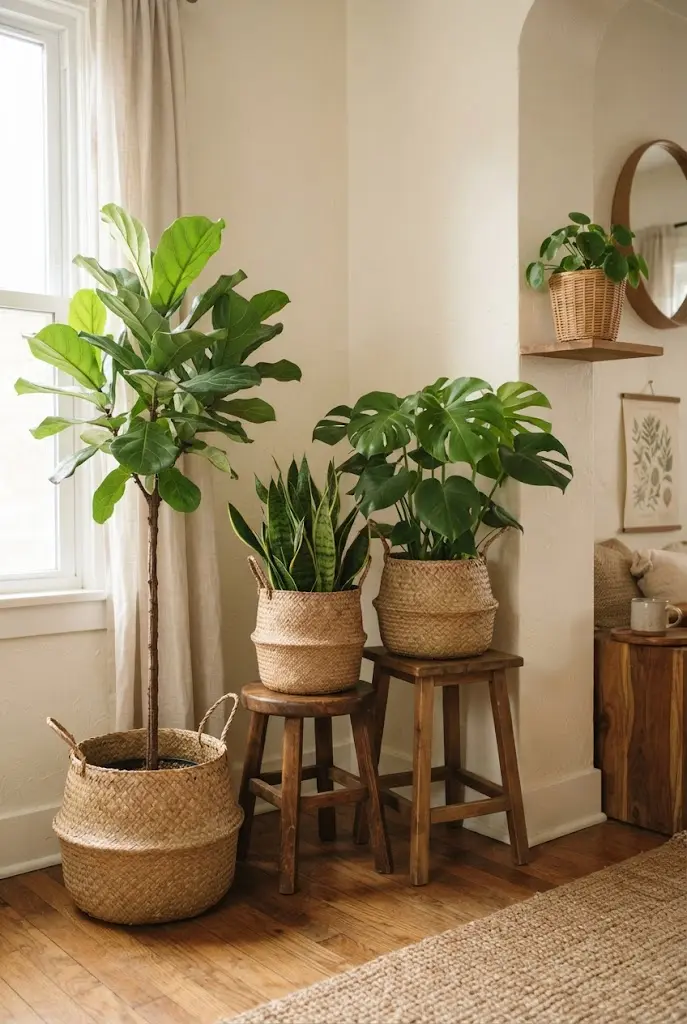
Decorative baskets can make ordinary plant pots look warmer and more natural. Choose baskets in different sizes while keeping their colors coordinated. Place large baskets directly on the floor and smaller ones on stools. Natural woven materials work particularly well with green foliage. Avoid covering pots with baskets that do not allow proper drainage unless the plant remains in a separate nursery pot. Arrange the baskets at different heights for visual interest. This style works with farmhouse, boho, coastal, and casual interiors. Keep the arrangement simple enough to show the plants clearly. Natural textures can soften a modern room. A basket-based plant corner can feel comfortable and welcoming.
16. Create a Kitchen Plant Corner

A kitchen corner can hold plants that enjoy suitable light and indoor conditions. Use small pots on an open shelf or countertop if there is enough space. Herbs can be especially useful near a bright kitchen window. Keep plants away from direct heat, splashing water, and cooking surfaces. Choose containers that are easy to clean. A narrow plant stand can work well in an unused kitchen corner. Keep the display compact so it does not interfere with food preparation. Use matching pots to maintain an organized appearance. Avoid overcrowding countertops. A small amount of greenery can make a kitchen feel fresher without reducing functionality.
17. Use a Narrow Corner Plant Stand
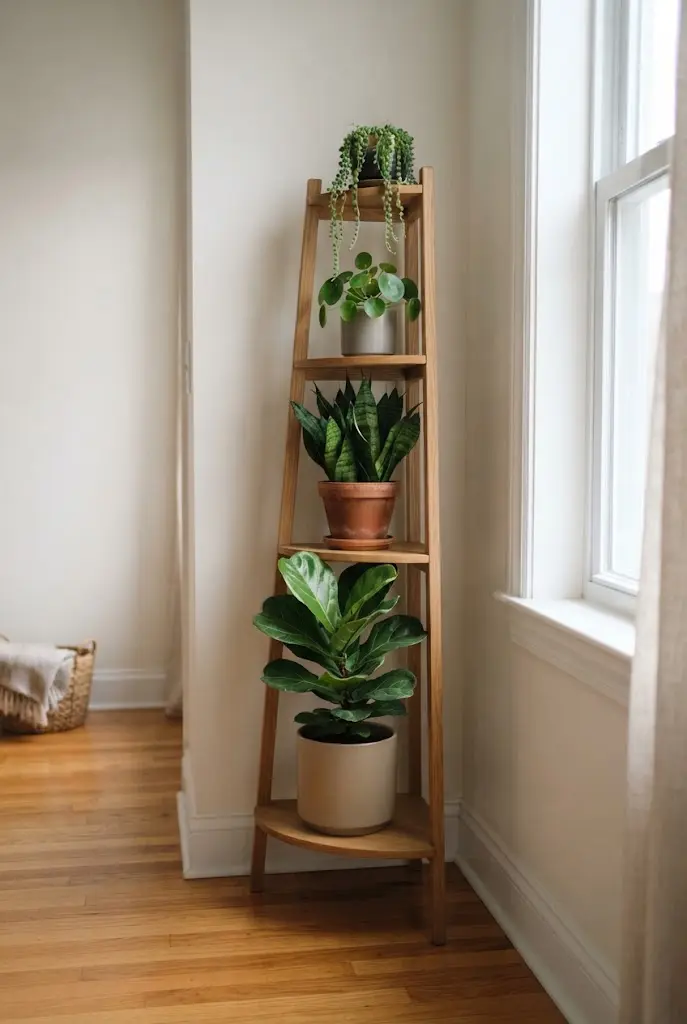
A narrow plant stand is ideal for corners where floor space is limited. Choose a vertical stand with several levels. Place the largest plant on the bottom and smaller plants higher up. Make sure the stand is stable and does not block nearby doors. Use pots that fit securely on each shelf. Similar pot colors can make the arrangement look organized. This setup can work in apartments, hallways, bedrooms, and offices. Choose plants based on the amount of available light. Leave enough room for leaves to grow naturally. A slim stand can provide several layers of greenery without taking up much floor area.
18. Add a Plant Corner to a Home Office
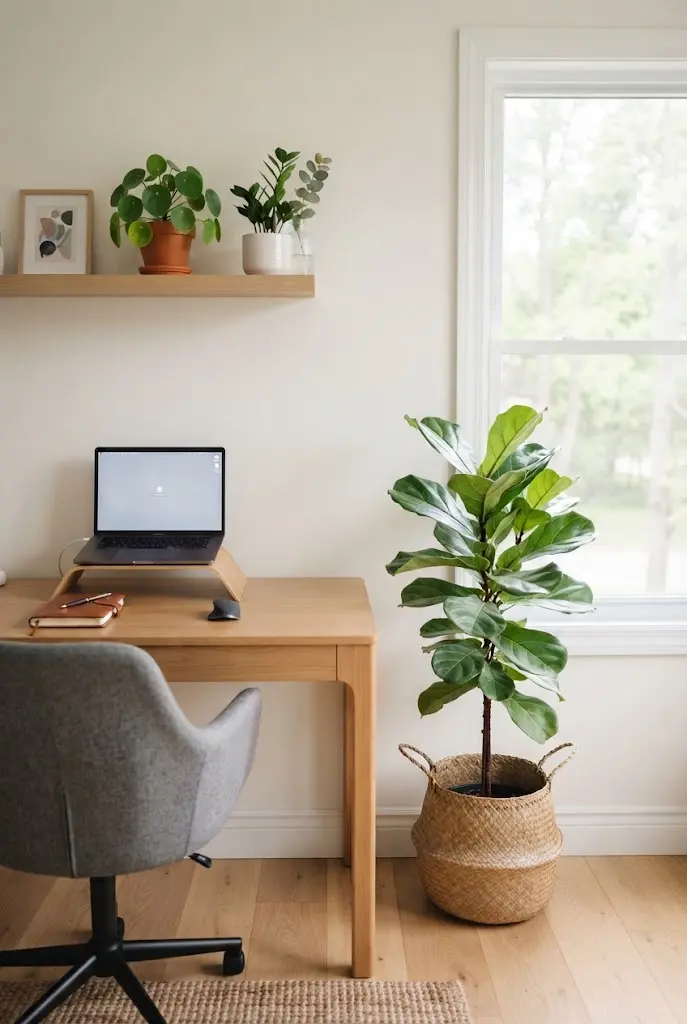
Plants can add a natural element to a home office without taking attention away from the workspace. Place a medium plant beside the desk rather than directly on the keyboard area. Add one or two small plants on a shelf or side table. Choose compact varieties if the office is small. Keep leaves away from computer equipment and electrical connections. A simple ceramic pot can complement modern office furniture. Position the plants where they receive suitable indirect light. Avoid creating a cluttered work surface. A carefully arranged green corner can make the office feel more comfortable. Keep the setup practical enough for everyday work.
19. Arrange Plants Around a Window Seat

A window seat can provide an excellent setting for a small plant display. Place compact plants on the sides of the seat rather than blocking the main seating area. Use a taller plant on the floor beside the window. Select plants that match the amount of sunlight available. Keep pots stable and easy to move when cleaning. Soft cushions can make the area feel more comfortable. Use neutral containers to complement the window-seat design. Avoid placing plants where leaves constantly touch the glass. This arrangement works particularly well in bright bedrooms and reading spaces. The combination of natural light and greenery can create a peaceful corner.
20. Make a Rustic Plant Corner
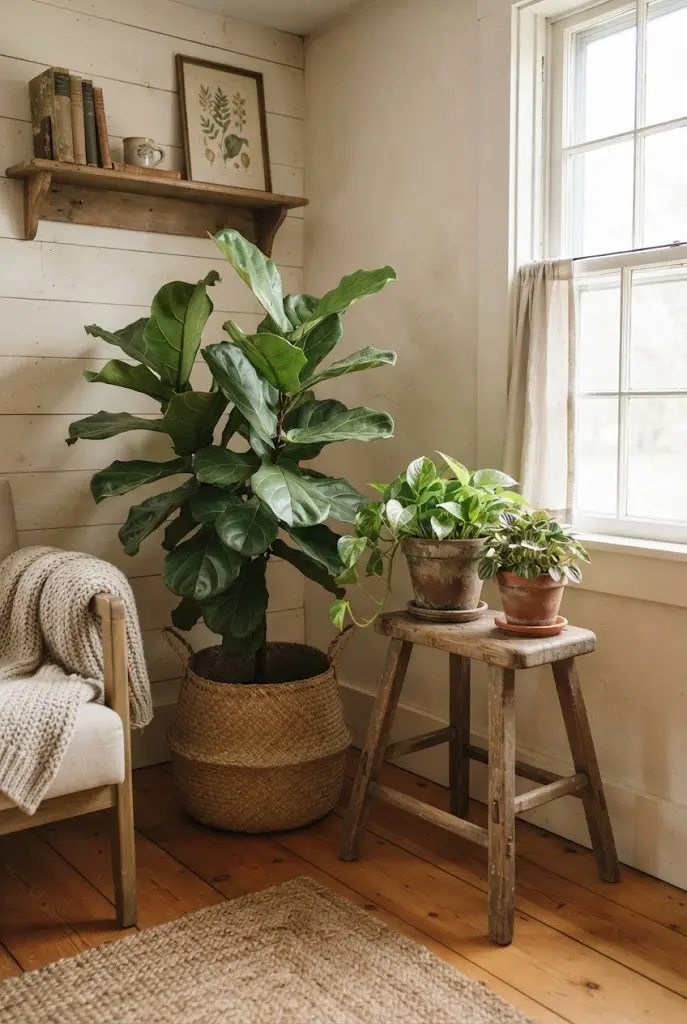
A rustic plant corner can combine greenery with aged wood and natural textures. Use a reclaimed-looking wooden stool or small shelf for the plants. Add terracotta or matte ceramic pots for a simple farmhouse appearance. Choose plants with varied foliage but keep the overall display relaxed. A woven basket can hold a larger floor plant. Place the arrangement near a source of suitable natural light. Avoid using too many decorative accessories. The plants should remain the main visual feature. This style fits comfortably into many traditional and farmhouse-inspired American homes. Keep the materials natural and the arrangement slightly informal. The result should feel warm rather than overly polished.
21. Use a Corner Bookshelf for Plants
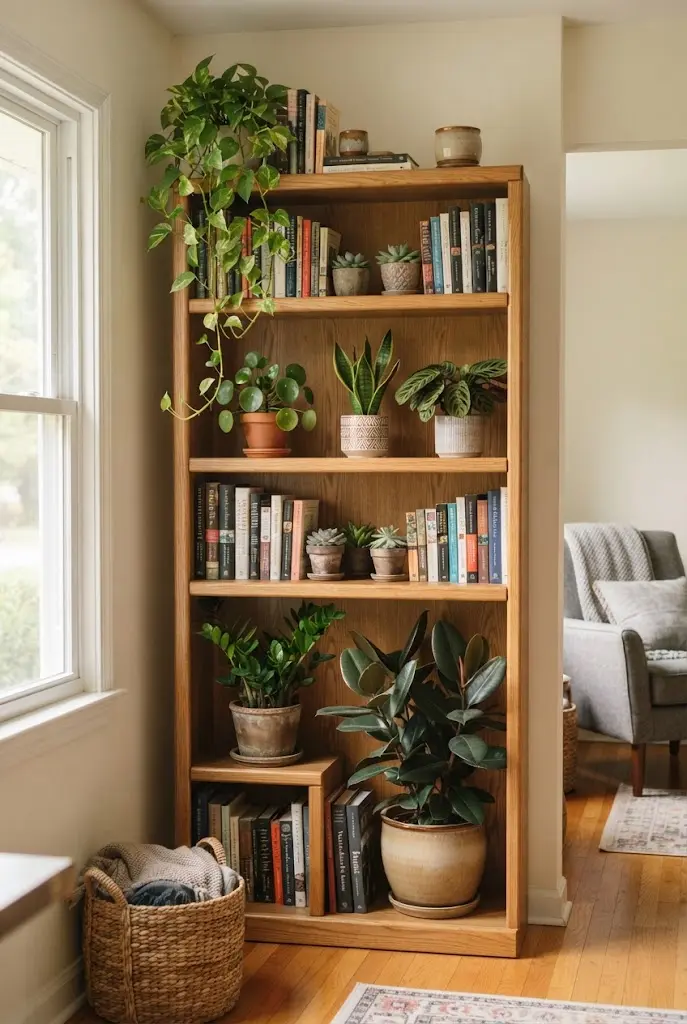
A corner bookshelf can double as a plant display when arranged carefully. Place small plants between books rather than filling every shelf with greenery. Keep heavier pots on lower shelves for stability. Use one trailing plant on an upper shelf to soften the vertical structure. Mix greenery with books and a few simple decorative objects. Make sure the shelf is strong enough to support the added weight. Choose plants that fit the available light. Avoid placing plants where water could damage books. This approach works especially well in living rooms and home offices. A bookshelf plant display can combine practical storage with natural decoration.
22. Create a Plant Corner With a Small Stool
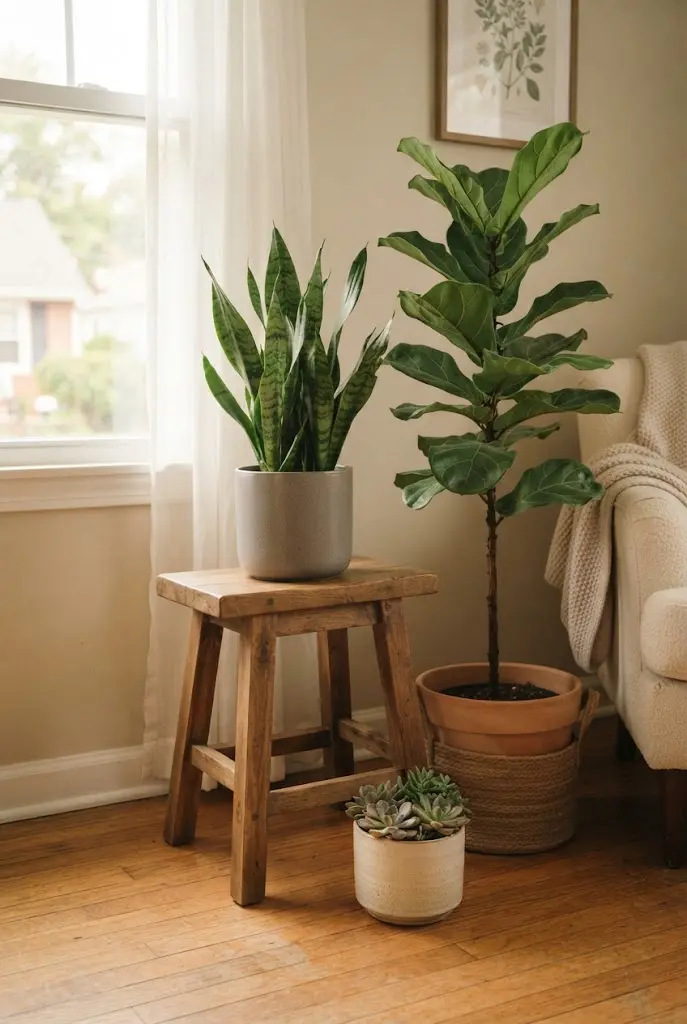
A simple stool can provide an inexpensive way to add height to a plant display. Place a medium-sized plant on the stool and a taller plant beside it on the floor. Add one small plant in front if there is enough space. Wooden stools work especially well with natural green foliage. Choose pots that complement the stool rather than competing with it. Keep the arrangement compact and balanced. Make sure the stool is sturdy enough to support the plant. Avoid using delicate furniture that can become unstable when wet. This idea works in almost any room. A basic stool can make an otherwise flat plant arrangement look more layered.
23. Arrange Plants in a Sunroom Corner
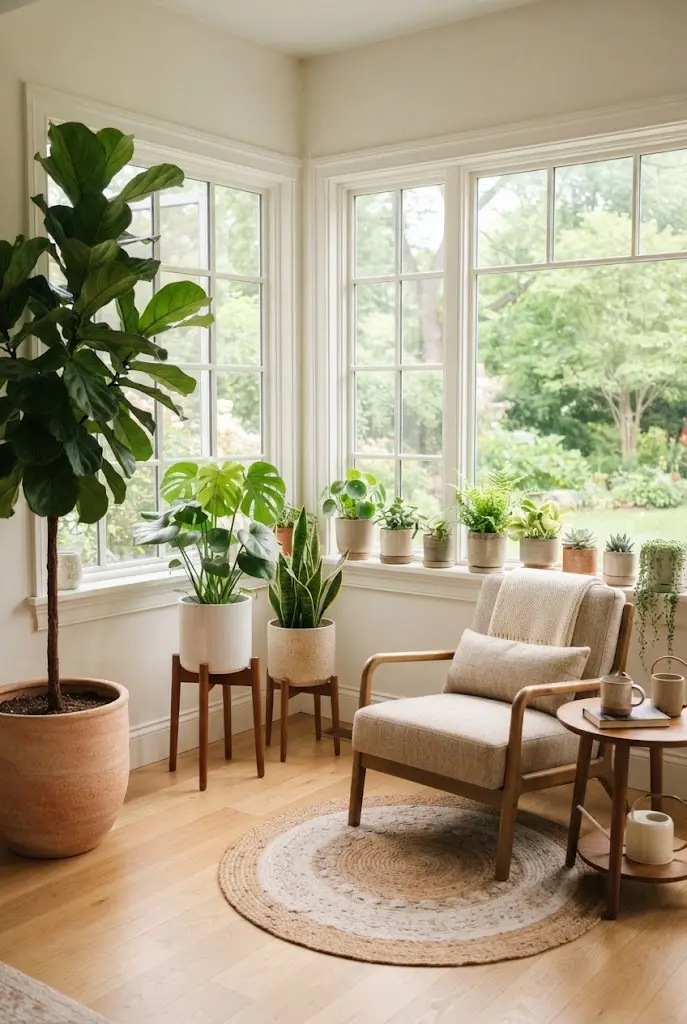
A sunroom naturally provides an inviting setting for indoor plants. Use the brightest areas for plants that need more light. Combine large floor plants with smaller pots on stands. Arrange plants around seating while leaving pathways clear. Use baskets and natural wood to complement the bright space. Rotate plants when appropriate so growth remains balanced. Protect sensitive plants from harsh direct sunlight if necessary. Avoid placing every plant directly against the glass. Different leaf shapes can create a lush but organized display. A sunroom plant corner can feel like a small indoor garden. Keep the arrangement comfortable enough for everyday use.
24. Create a Small Apartment Plant Corner
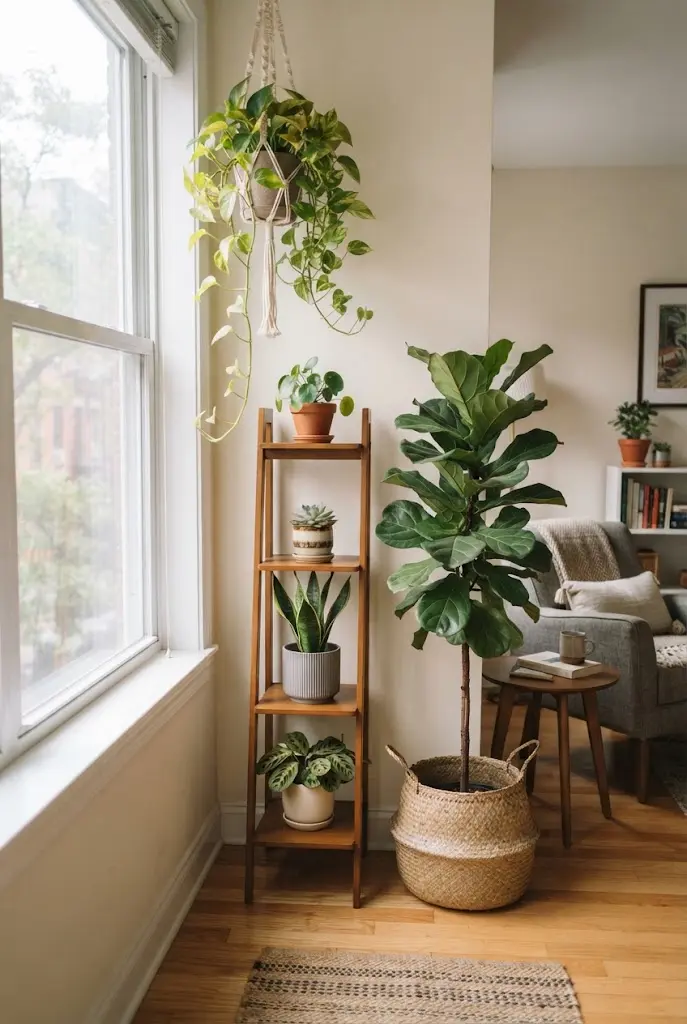
Small apartments can still have attractive plant corners with careful planning. Choose vertical shelves or a narrow plant stand instead of wide furniture. Use small and medium plants that fit the available area. Place taller plants at the back and smaller ones in front. Hanging plants can add greenery without using floor space. Keep the arrangement close to a suitable light source. Avoid blocking doors, windows, or heating vents. Choose lightweight pots that are easy to move. A small number of well-arranged plants can have more impact than a crowded collection. This approach makes limited space feel greener without sacrificing functionality.
25. Use Terracotta Pots for a Warm Look
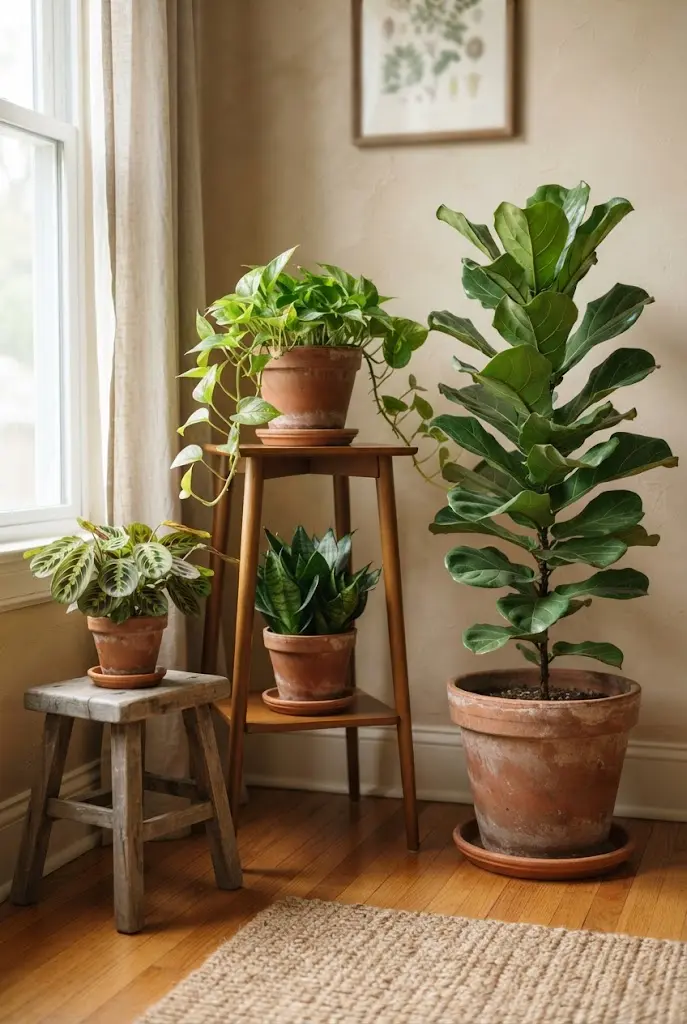
Terracotta pots can give a plant corner a warm and natural appearance. Use several pots in different sizes while keeping the arrangement visually balanced. Place large pots on the floor and smaller ones on a wooden stand. The earthy orange color works well with green foliage and natural wood. Make sure each pot has proper drainage. Use trays underneath indoor pots to protect flooring and furniture. Select plants with different leaf shapes for added interest. Avoid placing too many terracotta pots in a small corner. The simple material can work with rustic, boho, and traditional interiors. A terracotta-focused display creates an earthy and timeless look.
26. Create a Modern Black-and-Green Plant Corner
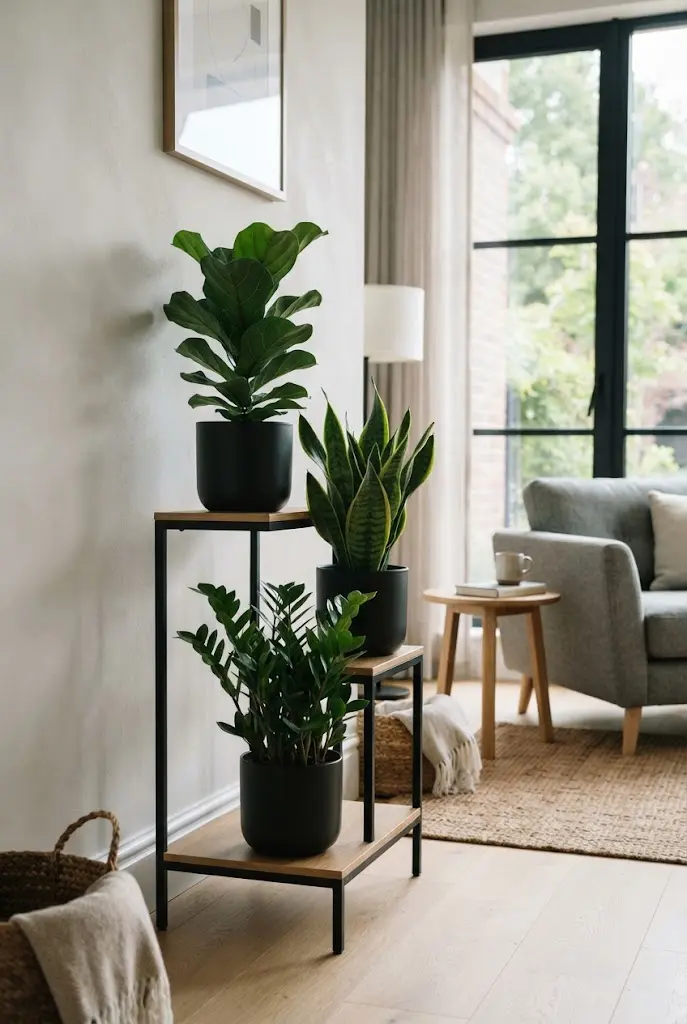
Black planters can create a strong contrast against green foliage. Choose simple matte black pots with clean shapes. Arrange them on a black or natural wood stand for a coordinated appearance. Use plants with different leaf sizes to prevent the display from looking repetitive. A light-colored wall can make the greenery and dark containers stand out. Keep the furniture minimal. This idea works especially well in modern and industrial interiors. Make sure the dark containers do not make a small room feel visually heavy. Balance them with natural wood or neutral surroundings. A black-and-green palette can create a sophisticated plant corner.
27. Add Plants Beside a Media Console

The space beside a media console can often accommodate a plant without affecting the television area. Place one tall plant on the floor beside the console. Add a small plant on the console only if there is enough room. Keep plants away from cables and electronic equipment. Choose containers that complement the furniture. Avoid placing large leaves directly in front of the television. A simple woven basket can soften a modern media setup. Use plants that tolerate the room’s lighting conditions. Keep the area easy to clean. This arrangement adds greenery while maintaining the entertainment area’s practical function.
28. Make a Coastal-Style Plant Corner
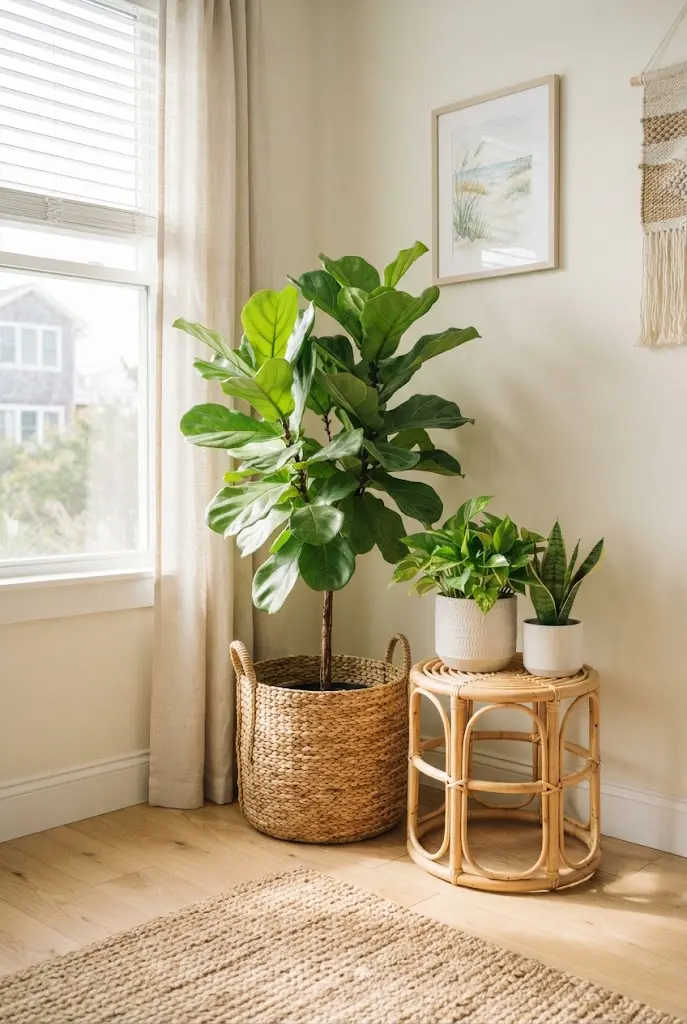
A coastal plant corner can combine green foliage with light colors and natural textures. Use white or sandy-colored pots with woven baskets. Choose plants with fresh green leaves and relaxed shapes. Light wood furniture can reinforce the coastal feeling. Keep the arrangement airy instead of dense. Place the plants near bright natural light when appropriate. Avoid excessive nautical decorations so the greenery remains the focus. A small rattan stool can add another level. This style works well in bright American homes and beach-inspired interiors. Use soft neutral colors around the plants. The result should feel fresh, light, and relaxed.
29. Arrange Plants Near the Staircase

The area beside a staircase can sometimes provide useful space for greenery. Choose plants that do not interfere with stairs or handrails. A tall plant can fill an empty floor corner while smaller plants can sit on a nearby narrow stand. Keep the arrangement away from areas where people frequently walk. Use stable containers that cannot easily tip. Select plants according to the available natural or artificial light. Avoid placing hanging plants directly over the staircase unless properly secured and safely positioned. Neutral pots can match the surrounding architecture. A carefully planned display can soften a hard architectural corner. Keep safety and clear movement as the main priorities.
30. Use a Tiered Plant Stand

A tiered plant stand makes it easy to display several plants within one compact footprint. Place larger plants on lower levels and smaller plants toward the top. Use plants with different leaf shapes to create contrast. Matching pots can make the display look organized. Leave enough room between plants for healthy growth and easy watering. Choose a stand with a stable base. Position it near appropriate light without blocking a window. This setup is useful in apartments, bedrooms, offices, and living rooms. Avoid putting very heavy pots on high levels. A tiered stand provides height while keeping the arrangement compact.
31. Create a Plant Corner With a Mirror
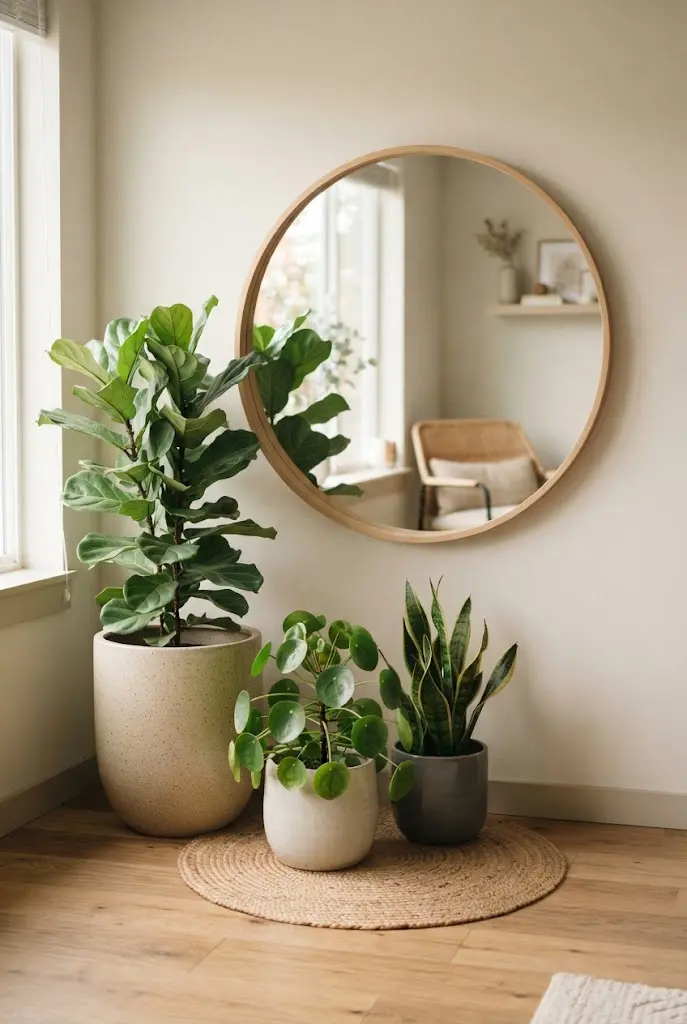
A mirror can make a small plant corner feel brighter and more spacious. Place a tall mirror behind or beside the plant arrangement. Add one large plant and two smaller plants in front of it. Make sure the mirror is securely mounted or positioned safely. The reflection can visually repeat the greenery and add depth. Use simple frames that match the room’s decor. Avoid filling the area with too many accessories. Position the display where natural light can reach the plants. Keep the mirror clean so the corner looks polished. This combination works particularly well in small apartments and entryways.
32. Create a Dark and Moody Plant Corner
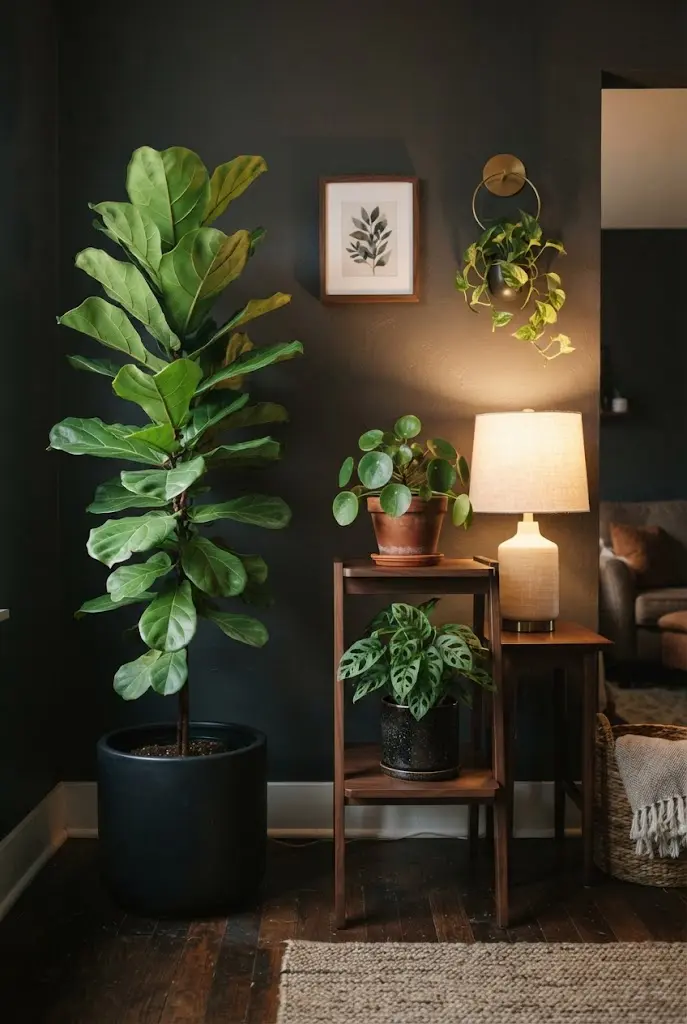
Dark interiors can make green foliage stand out beautifully. Use deep neutral walls or furniture with rich green plants. Choose simple dark ceramic or natural wood containers. Add a warm floor lamp if the plants’ lighting needs allow. Arrange plants at different heights to create depth. Avoid making the corner too crowded or visually heavy. Use plants with strong leaf shapes that remain noticeable against the darker background. Keep the floor area neat. Select plants according to actual available light rather than appearance alone. A carefully balanced dark plant corner can feel cozy and sophisticated.
33. Create a Plant Corner With Natural Wood

Natural wood can provide a warm foundation for an indoor plant display. Use wooden stools, shelves, or a narrow plant stand to create different levels. Combine the wood with green foliage and neutral ceramic or woven pots. Keep the wood tones relatively consistent for a cohesive appearance. Place larger plants on the floor and smaller ones on the wooden furniture. A trailing plant can add softness to straight wooden lines. This style works with modern, Scandinavian, farmhouse, and casual interiors. Avoid using too many wood accessories in a small area. Let the plants and natural materials remain the main features. The result can feel warm, simple, and connected to nature.
34. Build a Layered Indoor Garden Corner

A layered indoor garden corner combines several heights, textures, and plant sizes in one organized space. Begin with a tall floor plant as the main anchor. Add medium plants on stands and small plants on shelves or stools. Include one trailing plant to connect the upper and lower levels. Use coordinated pots to keep the collection visually unified. Leave enough empty space for each plant to grow naturally. Make sure every plant receives appropriate light. Keep pathways and furniture accessible. Avoid overcrowding even when using many plants. A carefully layered arrangement can turn an unused corner into a striking indoor garden. The final design should feel full of life while remaining practical for everyday home use.