21 Creative Plant Wall Ideas for Your Home
Creative plant wall ideas can instantly bring color, texture, and natural character into an American home. Whether you live in a spacious suburban house, a modern apartment, or a compact city home, a plant wall can fit beautifully into your space. Vertical greenery is also a smart way to decorate walls without taking up valuable floor space. From simple floating shelves to dramatic living walls, there are countless ways to display indoor plants. You can combine greenery with wood, rattan, ceramic planters, metal frames, or neutral decor for a stylish look. Low-maintenance plants can make these designs easier for busy homeowners to maintain. Plant walls work especially well in living rooms, entryways, kitchens, bedrooms, home offices, and bathrooms. The key is choosing plants and containers that match your home’s lighting and overall decorating style. These ideas can help you create a welcoming interior while making nature a noticeable part of your home. Explore these creative plant wall ideas to find an arrangement that suits your personal style.
1. Floating Plant Shelves

Floating shelves are one of the easiest ways to create a beautiful plant wall without complicated installation. Install several natural wood shelves vertically on an empty wall and arrange potted plants at different heights. Use trailing plants such as pothos or heartleaf philodendron to soften the edges. Mix small ceramic pots with woven planters for extra texture. Keep enough space between the shelves so the plants do not look overcrowded. A neutral wall creates a clean backdrop for green foliage. This idea works particularly well in living rooms, hallways, and home offices. Choose sturdy shelves that can safely support the weight of plants and containers. Place light-loving plants closer to windows when possible. The result is a simple botanical display that feels warm and contemporary.
2. Floor-to-Ceiling Living Wall
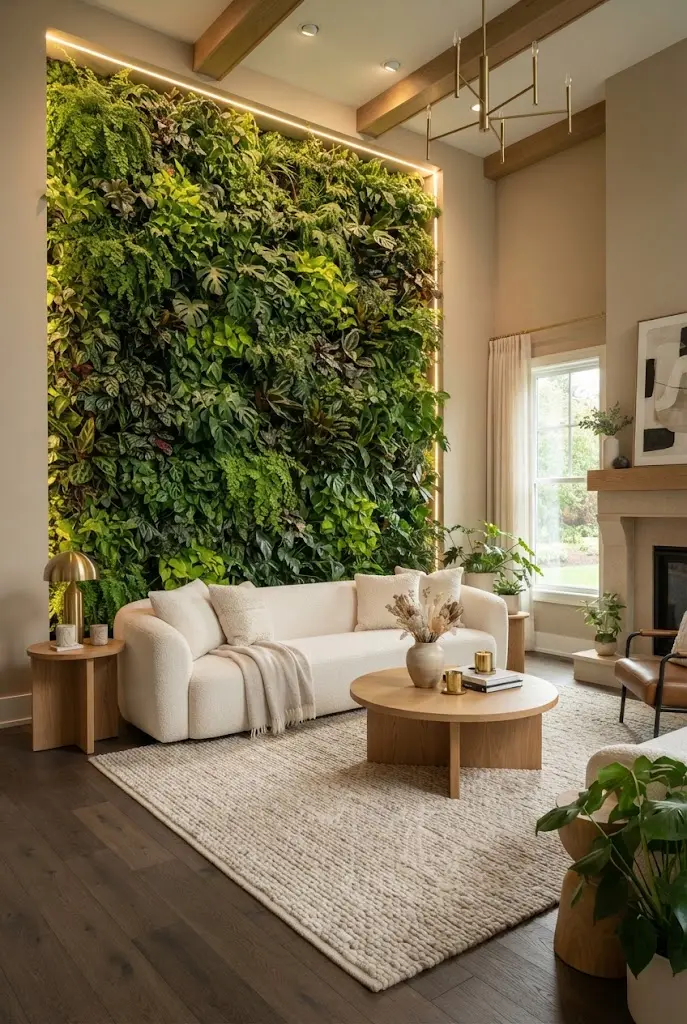
A floor-to-ceiling living wall creates a dramatic focal point for homes that love bold natural decor. Use a collection of plants arranged vertically across one large wall. A professional modular planter system can make the installation easier to organize and maintain. Choose plants with similar light and watering requirements for simpler care. Different leaf shapes can create beautiful visual depth. Add subtle lighting to highlight the foliage in the evening. This style looks especially impressive behind a sofa or dining area. Keep surrounding furniture relatively simple so the greenery remains the main attraction. Natural wood and warm neutral colors pair beautifully with a living wall. A carefully planned installation can make an ordinary interior feel like a sophisticated indoor garden.
3. Plant Wall With Wooden Grid
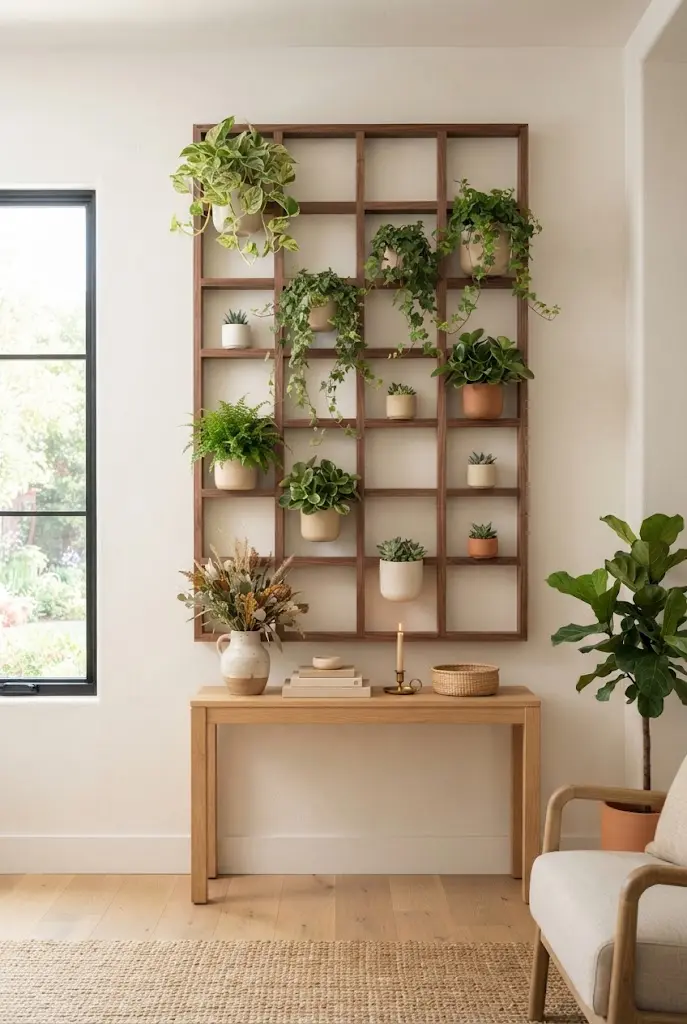
A wooden grid provides structure while giving plants a natural decorative framework. Mount a large rectangular wood grid against a neutral wall and attach small planters to selected sections. Leave some sections empty to keep the arrangement visually balanced. Use trailing plants to create movement across the grid. Small terracotta, cream, and stone-colored containers work well with natural wood. This design is ideal for homeowners who enjoy a modern farmhouse or Scandinavian-inspired aesthetic. You can also use the grid to support small hanging planters. Keep the plants varied in height and leaf shape for an organic appearance. A wooden grid works nicely in living rooms, dining areas, and entryways. It creates a decorative feature while keeping the overall design clean.
4. Hanging Macramé Plant Wall

Macramé hangers bring a relaxed and handcrafted feel to a plant wall. Arrange several cream-colored macramé planters at staggered heights on one wall. Add plants with flowing foliage to emphasize the soft movement of the design. This approach works especially well in boho, coastal, and relaxed modern interiors. Use a warm neutral wall as the background to keep the arrangement calm. Combine different pot shapes while keeping the macramé color consistent. Avoid placing too many planters close together because the hanging cords can look tangled. A simple wooden bench or rattan furniture can complement the display. Choose plants according to the amount of natural light available. This is an affordable way to turn a blank wall into a cozy botanical feature.
5. Minimalist Plant Wall

A minimalist plant wall proves that you do not need dozens of plants to create an impressive display. Select three to five statement plants and place them in simple matching planters. Arrange them vertically to create a clean visual rhythm. White, cream, gray, or matte black containers can complement modern interiors. Keep the wall mostly empty around the plants for an airy appearance. A large monstera can serve as the main focal point. Smaller plants can be positioned around it to create balance. This design works beautifully in contemporary apartments and minimalist American homes. Natural sunlight can enhance the green foliage against a neutral wall. The finished look feels fresh, organized, and sophisticated.
6. Entryway Plant Wall
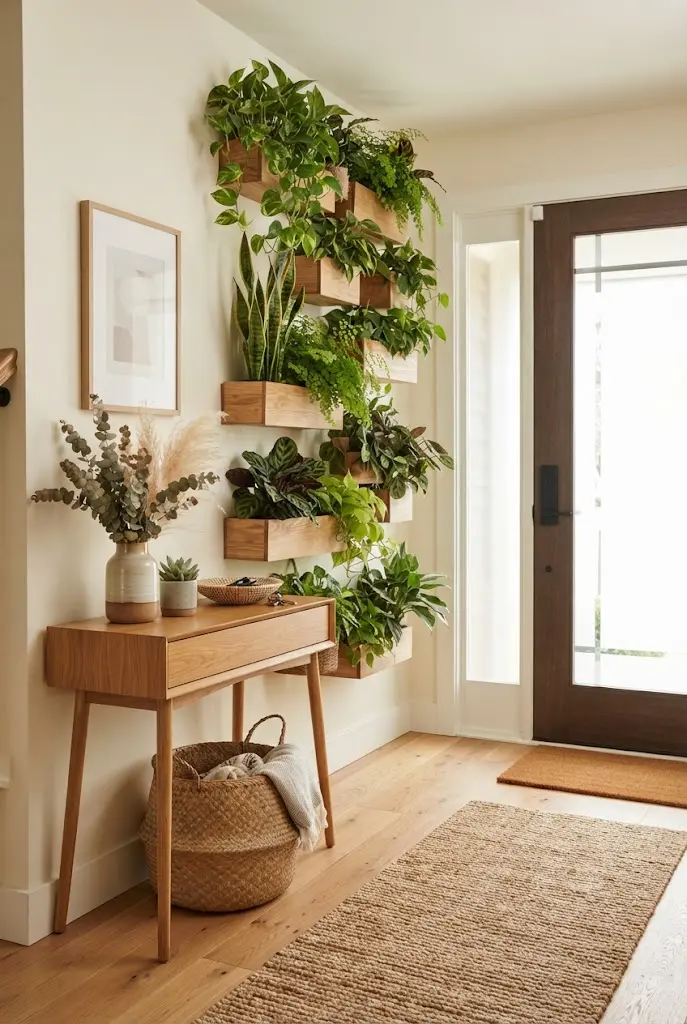
An entryway plant wall can make the first few steps inside your home feel welcoming and fresh. Use a narrow wall near the front door for a vertical arrangement of greenery. Wall-mounted planters are useful when floor space is limited. Choose hardy plants that can tolerate the available light conditions. A slim wood console can sit beneath the display without competing with the plants. Add a woven basket or natural fiber accent for warmth. Keep the arrangement practical so it does not interfere with doors or walking paths. Greenery can soften hard architectural surfaces around an entryway. This idea works particularly well in suburban homes with defined foyer areas. A well-planned display creates an inviting transition from the outdoors to the interior.
7. Kitchen Herb Plant Wall

A kitchen herb wall combines decoration with practical use. Mount small planters on a wall near a bright kitchen window. Grow herbs such as basil, thyme, mint, oregano, and rosemary in individual containers. Use matching pots to keep the arrangement organized. A wooden mounting board can add warmth against white or light-colored kitchen walls. Make sure the plants receive enough sunlight for healthy growth. Keep the herbs close enough to the cooking area to make harvesting convenient. Avoid placing plants directly above high-heat cooking surfaces. Small labels can be used in real life, but keeping the visual design simple creates a cleaner appearance. This idea brings fresh greenery into one of the busiest rooms in an American home.
8. Bedroom Plant Wall
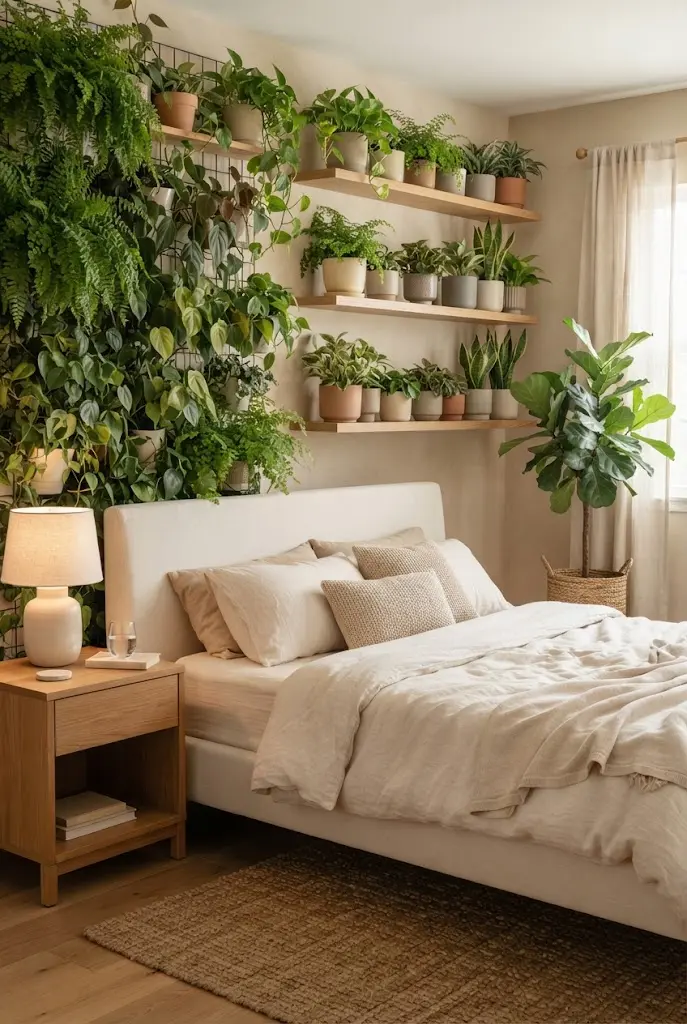
A plant wall can make a bedroom feel peaceful and connected to nature. Choose low-maintenance plants that suit the room’s lighting conditions. Position a few plants on shelves or wall-mounted planters rather than covering the entire wall. Soft green foliage pairs beautifully with cream bedding and natural wood furniture. Trailing plants can add gentle movement around a headboard wall. Avoid creating an overly dense arrangement in a small bedroom. Keep plant containers coordinated with the bedroom’s color palette. A few warm lamps can highlight the greenery at night. This design works particularly well with organic modern and biophilic bedroom styles. The overall effect is calm, natural, and relaxing.
9. Bathroom Green Wall

Bathrooms can become surprisingly beautiful spaces for plant walls when natural light is available. Use moisture-loving plants such as ferns, pothos, and certain tropical varieties. Mount small planters on a wall near a window or bright light source. Natural stone, wood, and ceramic materials can enhance the botanical theme. Keep plants away from areas where they may obstruct normal bathroom use. A small vertical arrangement can work even in a compact bathroom. Green foliage looks especially attractive against white tile or warm plaster. Use waterproof containers and mounting hardware designed for humid environments. A few plants can soften the hard surfaces typically found in bathrooms. The result is a spa-inspired space with a fresh natural character.
10. Plant Wall With Picture Frames
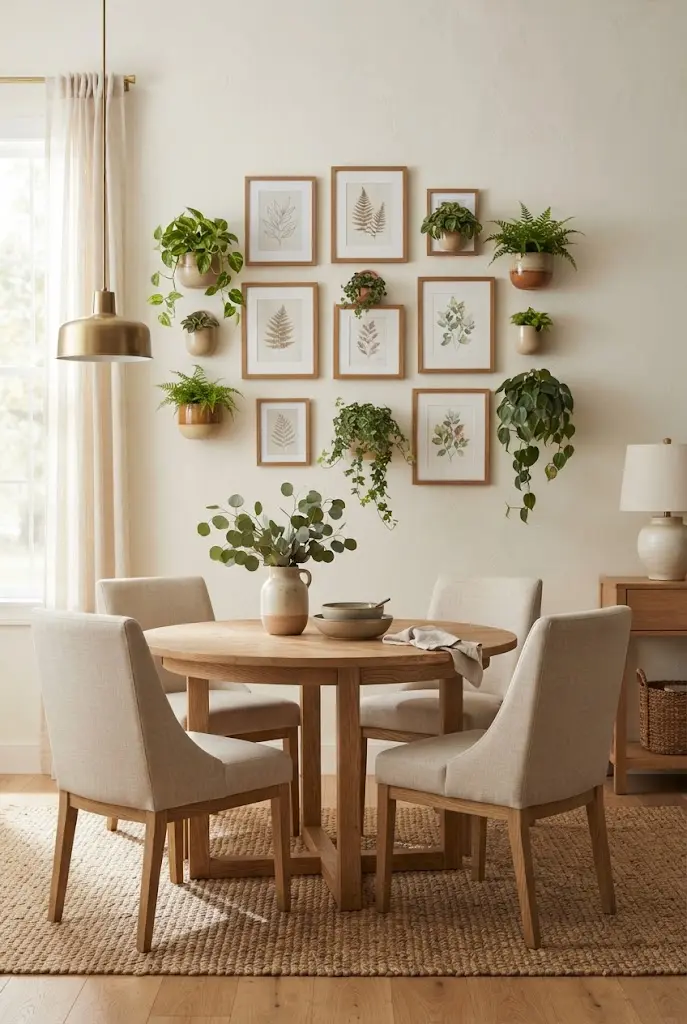
Combine greenery and wall art by creating a gallery-style plant wall. Use several framed botanical prints alongside small wall-mounted plants. Keep the frames in similar wood or neutral finishes for a cohesive appearance. Small plants can provide three-dimensional texture that flat artwork cannot. Arrange the frames and planters in a balanced gallery layout. This approach works well in dining rooms, hallways, and living spaces. Use plants with different leaf shapes to prevent the arrangement from looking repetitive. Keep enough negative space between each element. Natural oak frames can give the wall a warm organic character. The finished display feels like a combination of a traditional gallery wall and an indoor garden.
11. Industrial Metal Plant Wall

Metal frames can give a plant wall a modern industrial character. Choose a black or dark metal grid and attach small pots throughout the structure. The contrast between dark metal and green foliage creates a strong visual statement. Terracotta pots can add warmth to the otherwise industrial design. This idea works especially well in loft-style apartments and contemporary homes. Use trailing plants around the edges to soften the geometric structure. Keep the surrounding decor simple to avoid visual competition. Exposed wood, brick, or concrete-style finishes can complement the arrangement. Make sure the frame is securely mounted to the wall. The combination of metal and greenery creates a stylish urban look.
12. Stairway Plant Wall
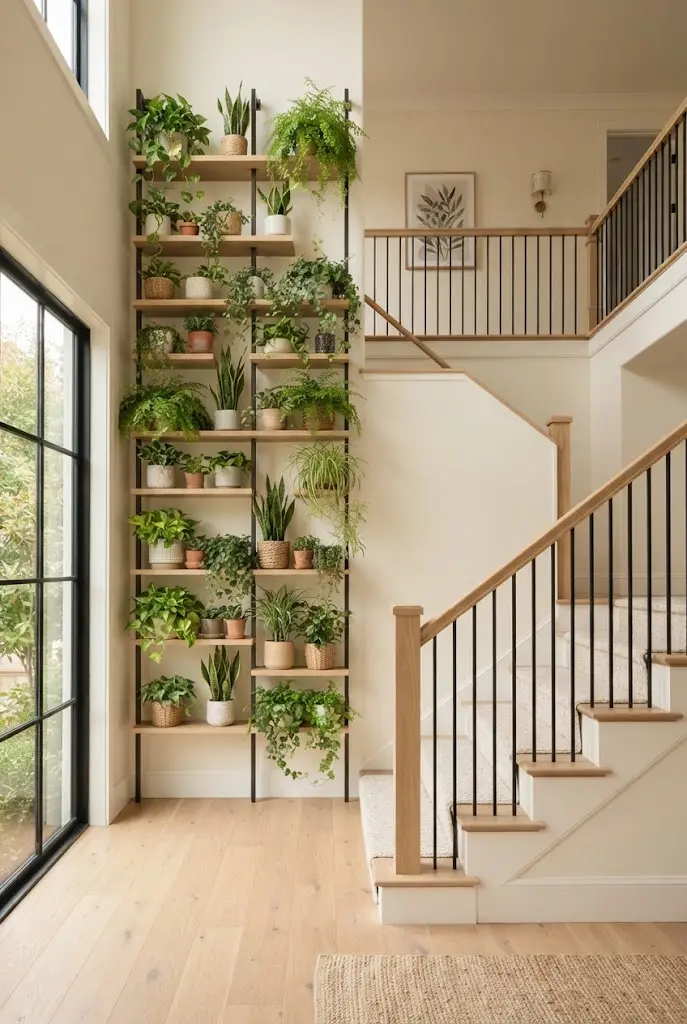
The wall beside a staircase is often an overlooked decorating opportunity. Add plants at different heights along the stairway wall to create a natural vertical composition. Floating shelves can hold compact plants without reducing the walking area. Choose lightweight planters that are securely mounted. Trailing foliage can visually connect the upper and lower sections of the staircase. Natural wood stair treads can reinforce the botanical theme. Keep the design simple enough that it does not distract from safe movement around the stairs. Use plants suited to the amount of natural light in the stairwell. This approach works beautifully in two-story American homes. It transforms an ordinary transition area into a memorable design feature.
13. Boho Plant Wall

A boho plant wall is perfect for creating a relaxed and artistic atmosphere. Combine plants with woven baskets, macramé hangers, rattan textures, and natural wood. Use plants with flowing leaves to create a soft organic appearance. Layer different planter shapes rather than using identical containers. Warm beige, cream, terracotta, and muted green tones work beautifully together. Place the plants against a textured plaster or neutral wall. Avoid making every section perfectly symmetrical. The charm of boho styling comes from its relaxed, collected appearance. Add a woven rug or natural fiber furniture nearby for continuity. This design can turn a plain living room wall into a cozy botanical retreat.
14. Plant Wall With Built-In Shelving
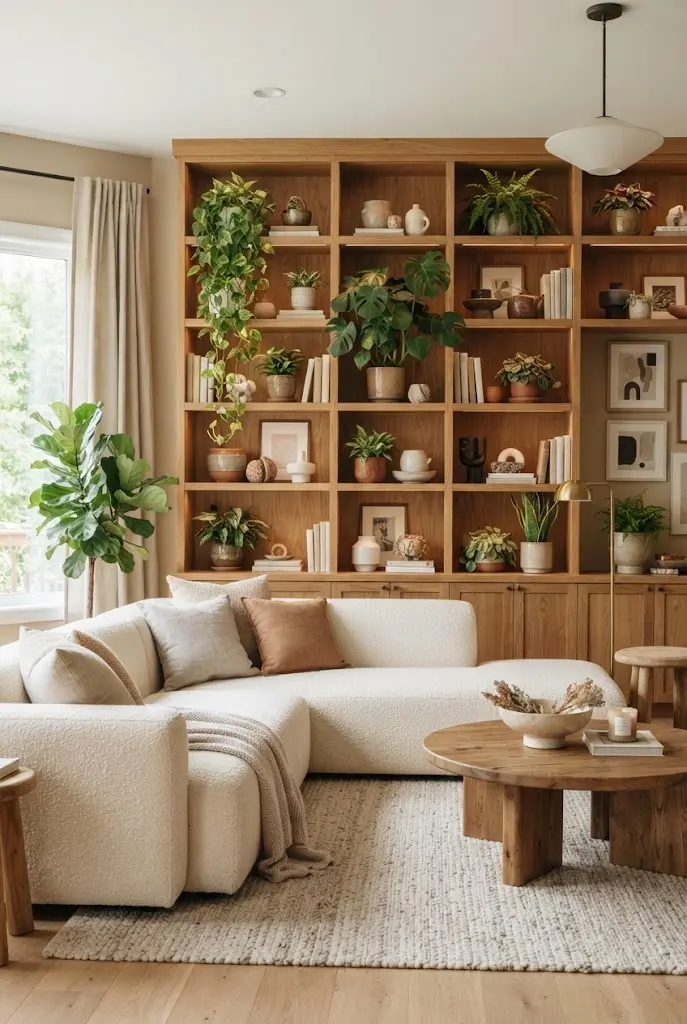
Built-in shelving provides an organized way to combine plants with books and decorative objects. Reserve several shelf sections specifically for greenery. Place larger plants on lower shelves and smaller plants higher up. Trailing plants can cascade naturally over the edges. Mix greenery with books, pottery, candles, and other neutral accessories. Keep the color palette restrained so the plants become the main source of color. This design is especially useful in living rooms and home offices. Built-in shelving can make a plant wall feel intentional rather than temporary. Choose plants according to the light reaching each shelf. The result is a practical storage feature with a strong botanical personality.
15. Small-Space Vertical Plant Wall

Small homes and apartments can benefit greatly from vertical plant displays. Instead of using floor-standing pots, mount compact planters directly onto the wall. Arrange them vertically to make the room feel taller. Choose smaller plants that will not overwhelm the available space. White or neutral planters can keep a compact arrangement visually light. A narrow wooden shelf can provide another layer for trailing plants. Position the display where it receives appropriate indirect or natural light. This idea works well in apartments, studios, and small home offices. Keep the surrounding wall uncluttered to make the greenery stand out. Vertical gardening lets you enjoy plants without sacrificing valuable floor area.
16. Dining Room Plant Wall

A dining room plant wall can create a fresh backdrop for everyday meals and gatherings. Place greenery on one wall behind or beside the dining table. Use a combination of shelves and hanging planters for visual variety. Natural wood furniture works particularly well with lush green foliage. Keep the arrangement sophisticated rather than overly dense. Small potted herbs can also provide a practical touch if the space receives enough light. Warm pendant lighting can highlight the greenery during evening meals. Neutral walls allow the foliage to become the room’s primary accent. Choose containers that coordinate with the dining chairs and table. This creates a welcoming space that feels connected to nature.
17. Home Office Plant Wall
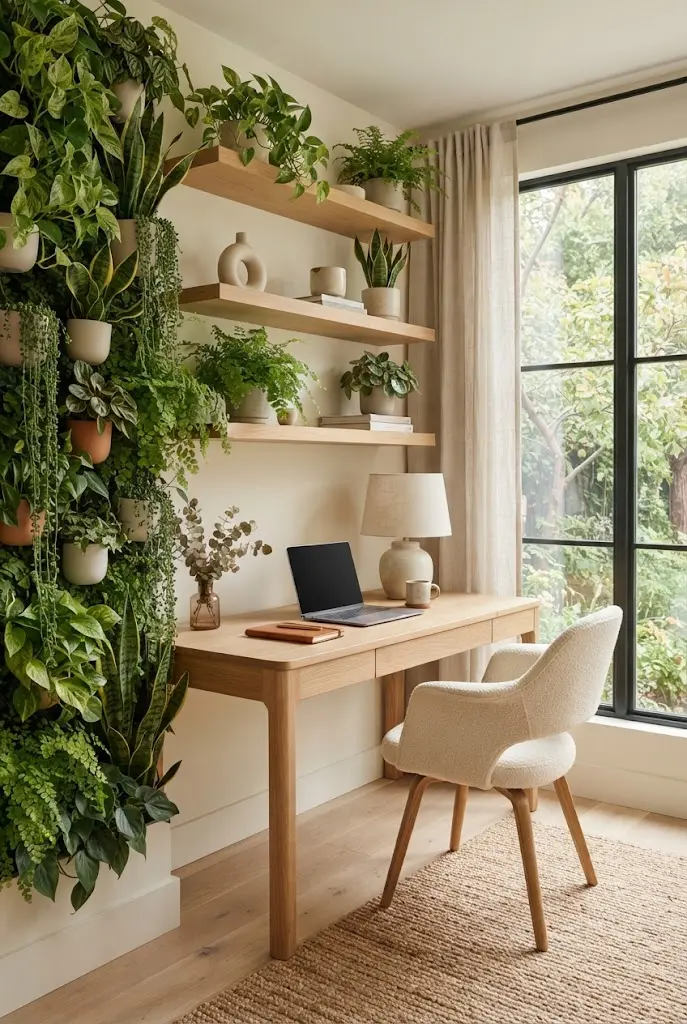
Adding plants to a home office can make the workspace feel more inviting. Use a wall-mounted arrangement behind or beside the desk rather than taking up valuable desk space. Choose plants that match the room’s lighting and maintenance needs. A few trailing plants can soften the straight lines of office furniture. Natural wood shelves can provide space for both plants and practical accessories. Keep the display organized so the workspace still feels productive. Greenery pairs beautifully with white desks, oak furniture, and neutral office chairs. Small plants can provide visual interest without becoming distracting. This style works for dedicated offices and compact work-from-home corners. A botanical wall can make daily work feel more comfortable and connected to nature.
18. Rustic Plant Wall
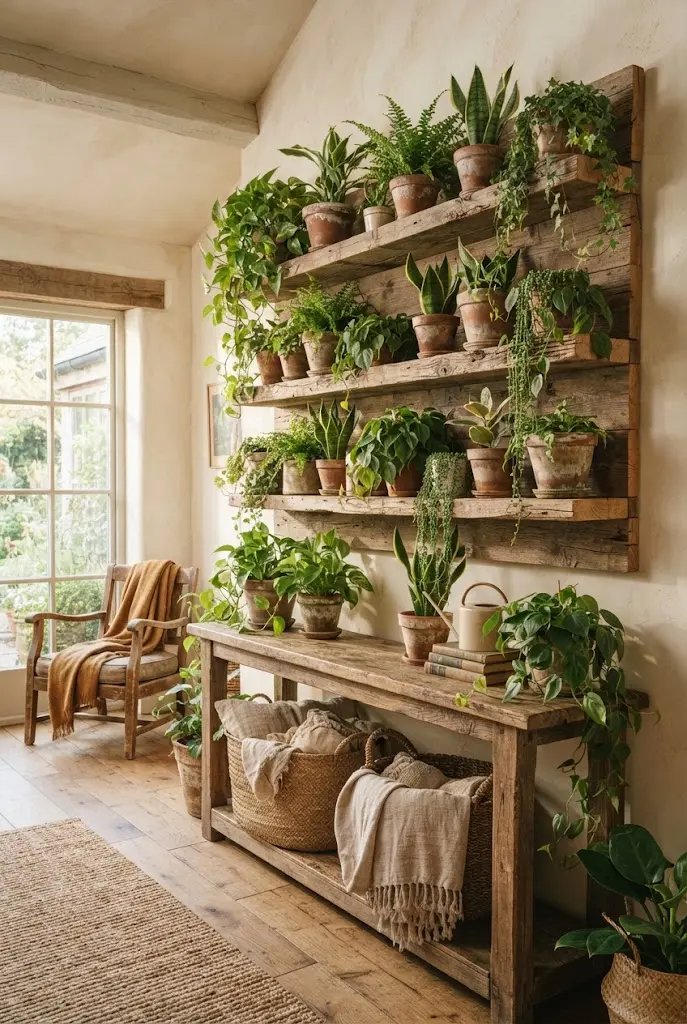
Rustic materials can make a plant wall feel warm and established. Use reclaimed-looking wood shelves or a weathered wooden panel as the foundation. Add plants in terracotta, stone, or aged ceramic pots. Choose foliage with different textures to create a naturally collected appearance. This style works especially well in farmhouse-inspired American homes. Keep the wall colors warm and earthy for a cohesive design. Small woven baskets can add additional texture around the plants. Avoid excessive decoration so the natural materials remain visible. Place the display near a window when possible for healthy plant growth. A rustic plant wall creates a charming combination of greenery and traditional warmth.
19. Window-Side Plant Wall
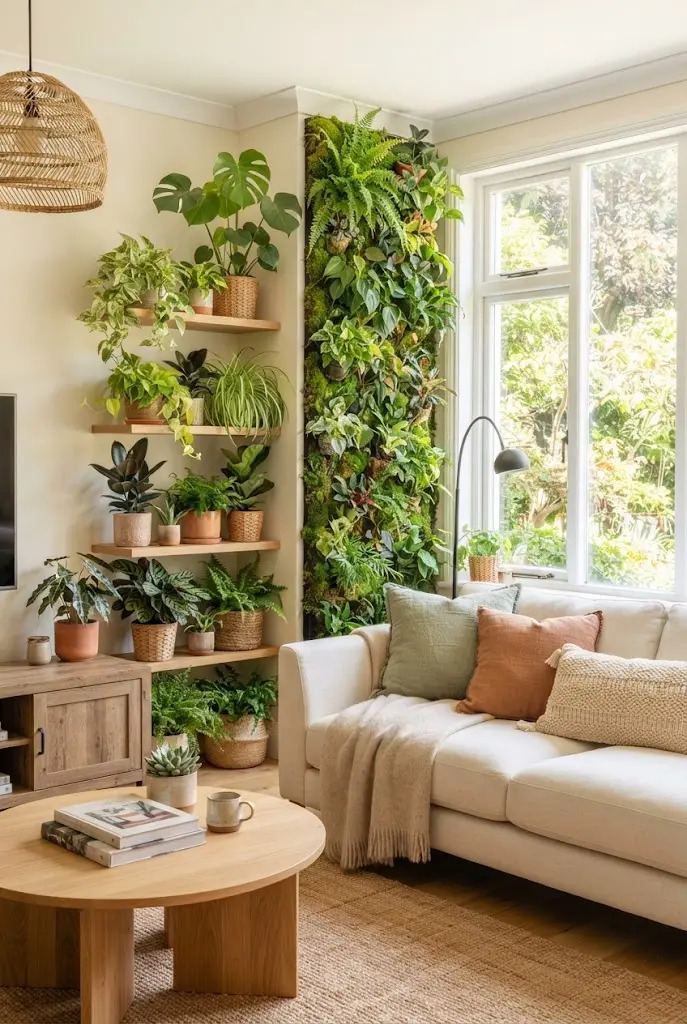
A wall beside a large window can provide an ideal location for a beautiful plant display. Use the natural light to showcase plants with different leaf colors and textures. Place taller plants near the bottom and smaller plants on wall shelves above. Avoid blocking the window itself so the room can still receive plenty of daylight. Light-colored planters help keep the arrangement visually bright. This style works well in sunrooms, living rooms, and breakfast areas. Use plants suited to direct or indirect light depending on the window orientation. Natural wood furniture can enhance the connection with the outdoors. The result is a bright botanical corner that feels fresh throughout the day. It is a simple way to make indoor greenery feel connected to the landscape outside.
20. Modern Geometric Plant Wall
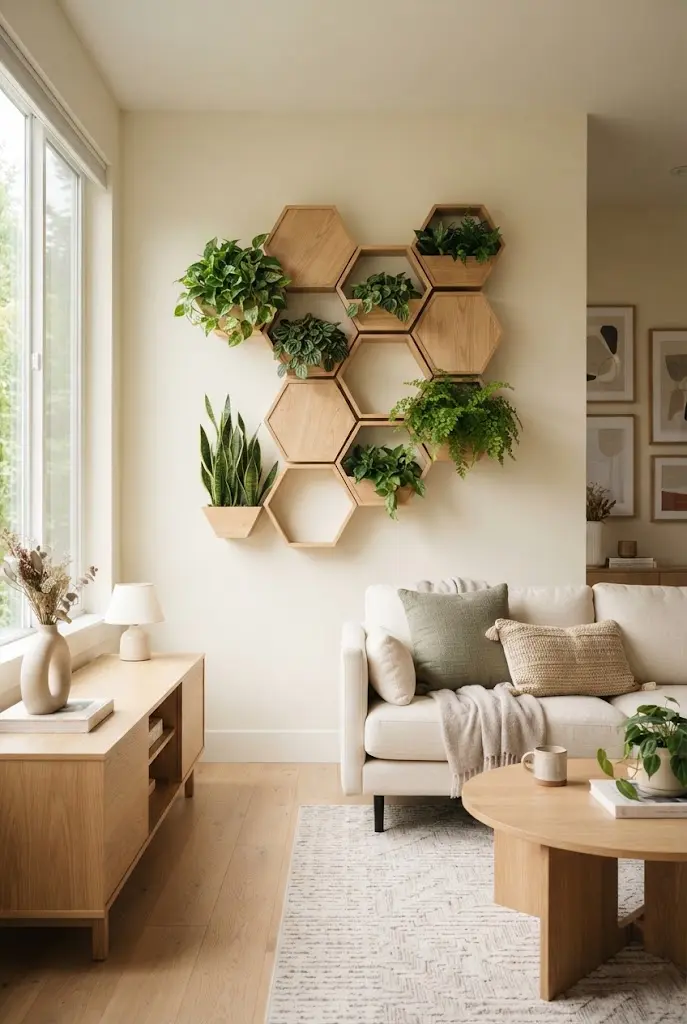
Geometric arrangements offer a modern alternative to traditional plant displays. Use hexagonal shelves, square boxes, or circular wall planters to create a structured pattern. Fill selected sections with plants while leaving others open. This creates an artistic balance between geometry and organic foliage. Choose simple containers in black, white, beige, or natural wood. Plants with distinct silhouettes work especially well in this style. Keep the surrounding room modern and uncluttered. This approach can become a striking focal point in a living room or entryway. Make sure each wall-mounted component is securely installed. The combination of precise shapes and natural greenery creates a contemporary statement.
21. Statement Monstera Plant Wall

Sometimes one dramatic plant can create the strongest plant wall design. Use a large monstera as the main focal point and surround it with a few smaller plants. Mount a simple shelf behind or beside the plant to create additional vertical interest. A neutral wall helps the large leaves stand out beautifully. Choose a stylish ceramic or woven planter that complements the rest of the room. Give the monstera enough space to spread naturally without crowding nearby furniture. This approach is easier to maintain than a dense living wall. It works particularly well in modern, tropical, and organic interiors. Add a small number of complementary plants for depth without overwhelming the feature. The result is a bold yet simple botanical statement.
Final Thoughts
Creative plant wall ideas can transform an ordinary wall into one of the most memorable features of your home. From simple shelves and macramé hangers to dramatic living walls, there is a style for nearly every interior.
When creating your own plant wall, consider the amount of natural light, available wall space, watering needs, and overall decorating style. Mixing natural wood, neutral pottery, woven textures, and lush foliage can create a warm look that works beautifully in American homes. Most importantly, choose an arrangement that you can realistically maintain. A thoughtfully designed plant wall can bring freshness, personality, and a strong connection to nature into your everyday space.