24 Farmhouse Boho Kitchen Design Ideas for a Cozy Home
Farmhouse boho kitchens combine the welcoming character of farmhouse interiors with the relaxed, artistic feel of bohemian decorating. This style works beautifully in American homes because it can adapt to everything from compact apartments to spacious suburban kitchens and country houses. Natural wood, woven textures, vintage accents, open shelving, earthy colors, and handmade-looking details help create a comfortable atmosphere. You can keep the farmhouse foundation simple while introducing boho personality through lighting, textiles, plants, and collected accessories. The goal is not to make every element perfectly coordinated, but to create a kitchen that feels warm, useful, and lived-in. Whether you prefer a subtle boho touch or a more layered look, these farmhouse boho kitchen design ideas can help you build a cozy space.
1. Add Natural Wood Cabinets
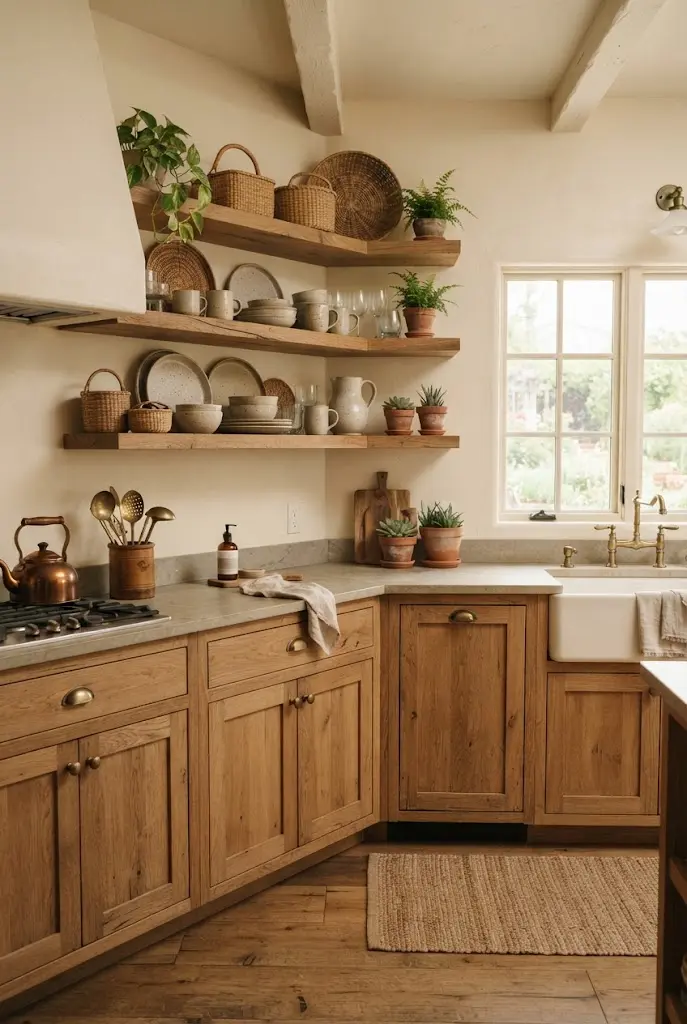
Natural wood cabinetry is an excellent starting point for a farmhouse boho kitchen because it brings warmth and texture into the room. Oak, pine, walnut, and reclaimed wood can all complement this decorating style. In a USA home, wooden cabinets can work with both traditional farmhouse architecture and newer open-plan kitchens. Choose finishes that allow some of the natural grain to remain visible rather than selecting an overly glossy surface. Pair the cabinets with simple hardware in aged brass, black, or antique bronze. Open shelves can also be added between upper cabinets to display ceramics and woven baskets. The combination creates a relaxed kitchen that feels welcoming without looking overly decorated. Natural wood also pairs beautifully with neutral walls and earthy accessories. Add a few green plants to soften the harder kitchen surfaces. The result is a practical yet cozy farmhouse boho kitchen.
2. Use Open Wooden Shelving
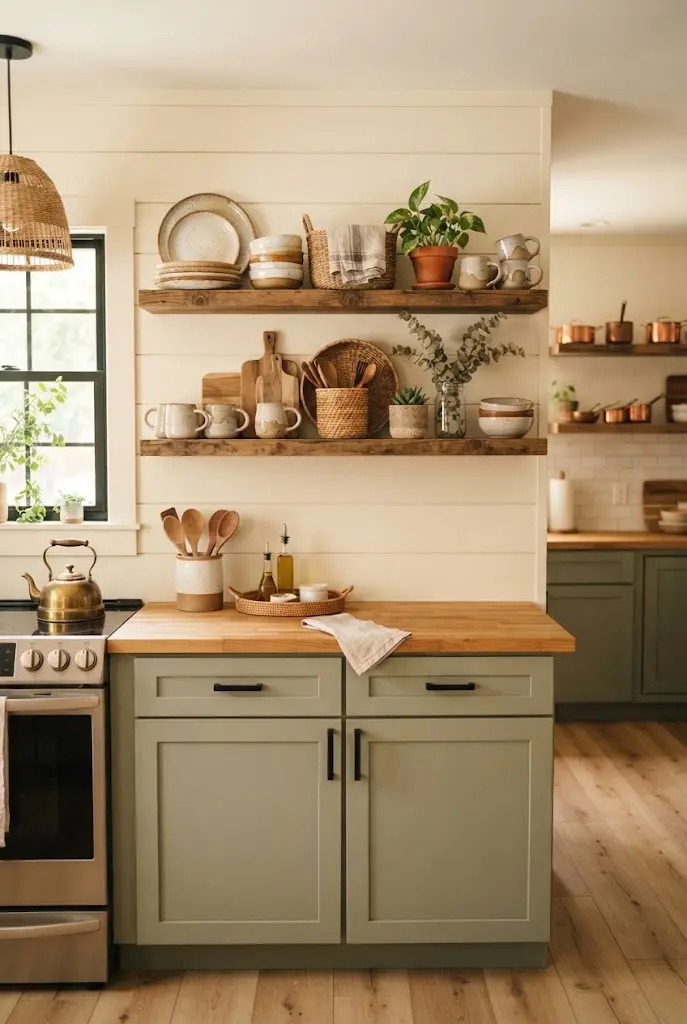
Open wooden shelving adds both farmhouse charm and boho character while giving you space to display everyday kitchen items. Instead of hiding everything behind cabinet doors, use shelves to showcase attractive dishes, mugs, glassware, baskets, and small decorative pieces. Reclaimed or lightly distressed wood can strengthen the farmhouse side of the design. For the boho element, layer handmade ceramics, woven containers, wooden cutting boards, and small plants across the shelves. Keep some empty space so the arrangement does not become visually crowded. A neutral wall behind the shelves can make the natural materials stand out. This approach works particularly well in smaller kitchens where bulky upper cabinets may make the room feel enclosed. Open shelves also make frequently used items easier to reach. Choose sturdy shelves with simple brackets for an authentic farmhouse appearance. A thoughtfully styled shelf can become one of the main visual features of your kitchen.
3. Install a Farmhouse Apron Sink
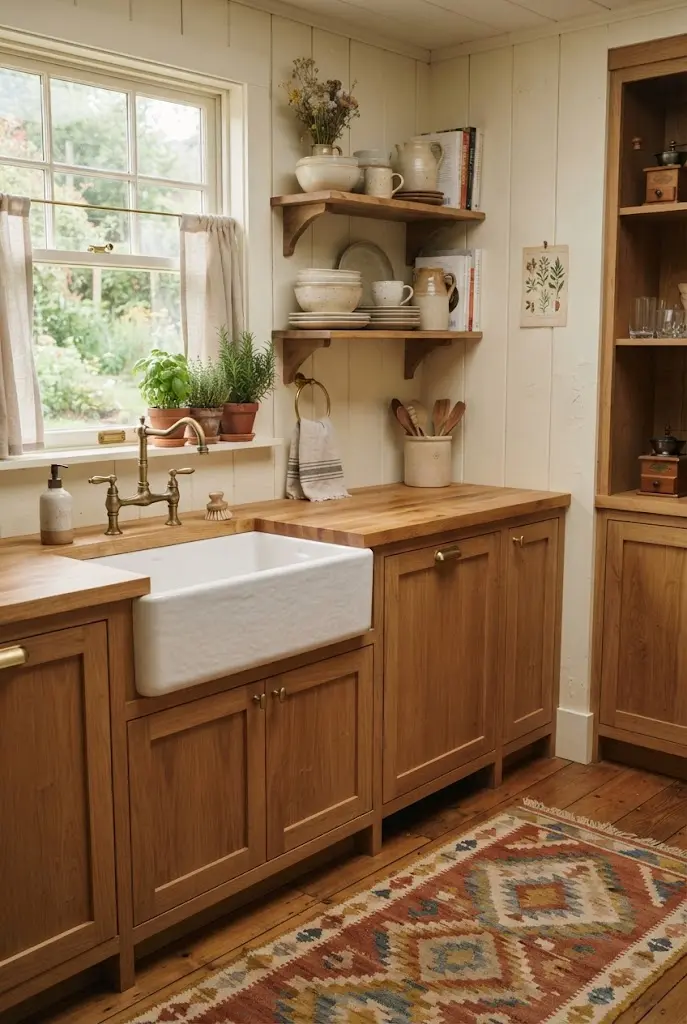
A farmhouse apron-front sink can instantly establish the classic foundation of a farmhouse boho kitchen. Its broad front panel gives the sink area a traditional appearance while providing a practical workspace for everyday cooking and cleaning. White fireclay is a timeless choice, but natural stone or muted finishes can also work with a more rustic design. Pair the sink with an aged brass, brushed nickel, or matte black faucet depending on your preferred look. Wooden counters or butcher-block accents can make the area feel even warmer. Add a woven runner or a small collection of potted herbs nearby for boho texture. The sink can become a functional focal point rather than just another appliance. Keep surrounding decor simple so the architectural character remains visible. Open shelving above or beside the sink can reinforce the relaxed style. This combination works particularly well in American farmhouse-inspired kitchens.
4. Add Woven Pendant Lights
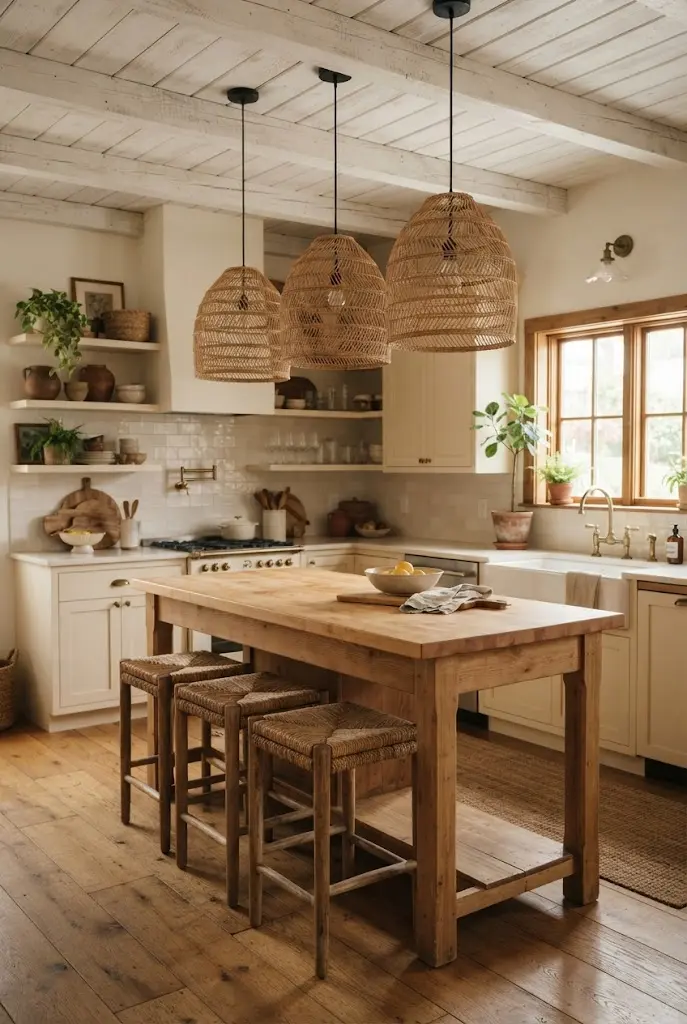
Lighting can dramatically change the mood of a farmhouse boho kitchen, and woven pendant lights are an easy way to introduce natural texture. Rattan, wicker, seagrass, and bamboo shades all provide an organic appearance. Hang one large pendant over a kitchen island or use two or three smaller fixtures over a longer counter. The woven material creates interesting shadows when the lights are switched on. Choose warm bulbs to make the room feel inviting during evenings. Pair the pendants with natural wood cabinetry and neutral countertops for a cohesive look. Black or aged-brass hardware can provide subtle contrast. Woven lighting also works beautifully with exposed beams and other farmhouse details. Keep the rest of the lighting understated so the pendants remain visually important. This idea is especially effective for open-plan kitchens connected to dining or living spaces.
5. Create a Neutral Color Palette
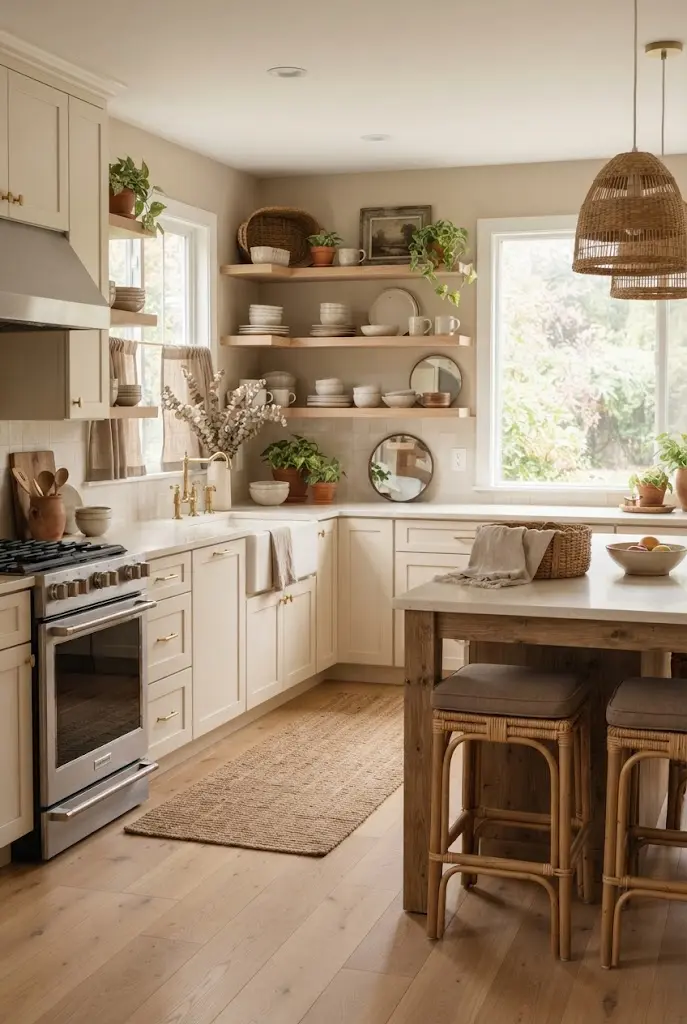
A neutral color palette provides a calm foundation for farmhouse boho kitchen decorating. Shades such as warm white, ivory, beige, taupe, sand, and soft greige can make the space feel bright without appearing cold. These colors work especially well with natural wood and woven accessories. Instead of using one exact shade everywhere, combine several related neutrals to create depth. Cream cabinets can be paired with a slightly darker backsplash and warm beige textiles. Wooden surfaces naturally introduce additional variation without overwhelming the palette. Add muted terracotta or sage green accents for subtle bohemian personality. Neutral kitchens are also flexible because accessories can easily be changed with the seasons. In American homes, this palette can complement both modern appliances and traditional architectural features. The finished space should feel relaxed rather than sterile. Texture becomes especially important when working with mostly neutral colors.
6. Introduce Vintage Kitchen Accessories
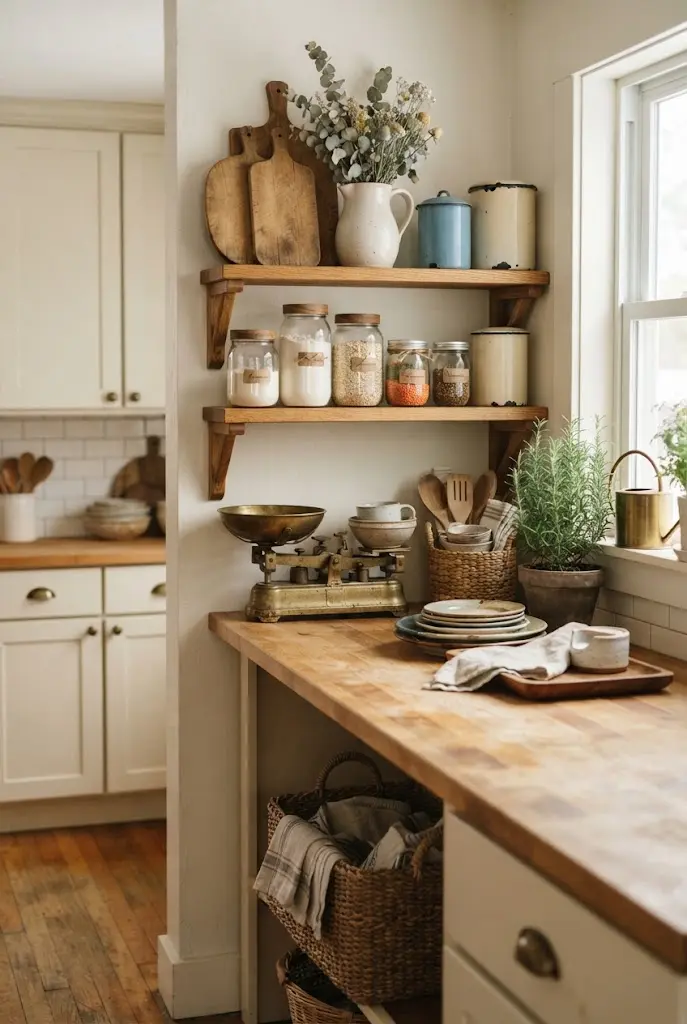
Vintage accessories can give a farmhouse boho kitchen a sense of history and personality. Look for old-style cutting boards, enamel containers, ceramic pitchers, wooden utensils, glass jars, or vintage-inspired kitchen scales. These pieces can be displayed on shelves or grouped together on a countertop. Avoid filling every surface with decorations because a few carefully selected objects often create a more authentic appearance. Mixing old-looking pieces with modern appliances helps the kitchen feel collected over time. Boho design naturally welcomes unusual objects and handmade-looking accessories. Farmhouse decorating adds an appreciation for simple, useful items. Choose pieces with warm neutral, earthy, or slightly faded colors. A vintage wooden stool can also serve as both seating and decoration. These details can make a newly renovated kitchen feel less generic. The result is a welcoming space with character.
7. Use Butcher Block Countertops
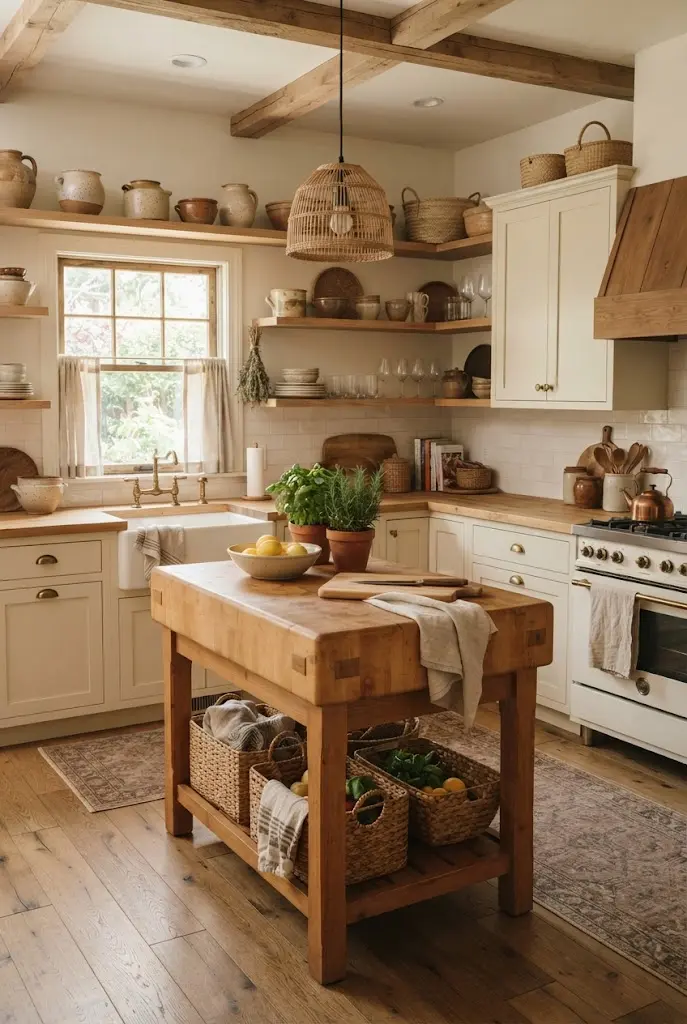
Butcher block countertops bring warmth and natural texture to farmhouse boho kitchens. Their wood surface works beautifully with cream cabinets, white walls, and earthy accessories. The material also adds a handcrafted feeling that complements the relaxed nature of bohemian decorating. You can use butcher block across the entire kitchen or reserve it for an island or breakfast counter. Pairing it with stone countertops elsewhere can create visual contrast. Wooden countertops look especially appealing when combined with ceramic bowls, woven baskets, and fresh herbs. Proper maintenance is important because wood countertops need appropriate cleaning and care. Their natural grain can become a major decorative feature without requiring additional ornamentation. In American kitchens, butcher block can suit both traditional farmhouse layouts and contemporary open-plan spaces. Keep surrounding colors soft to emphasize the wood. The result is warm, practical, and inviting.
8. Add Handmade Ceramic Decor
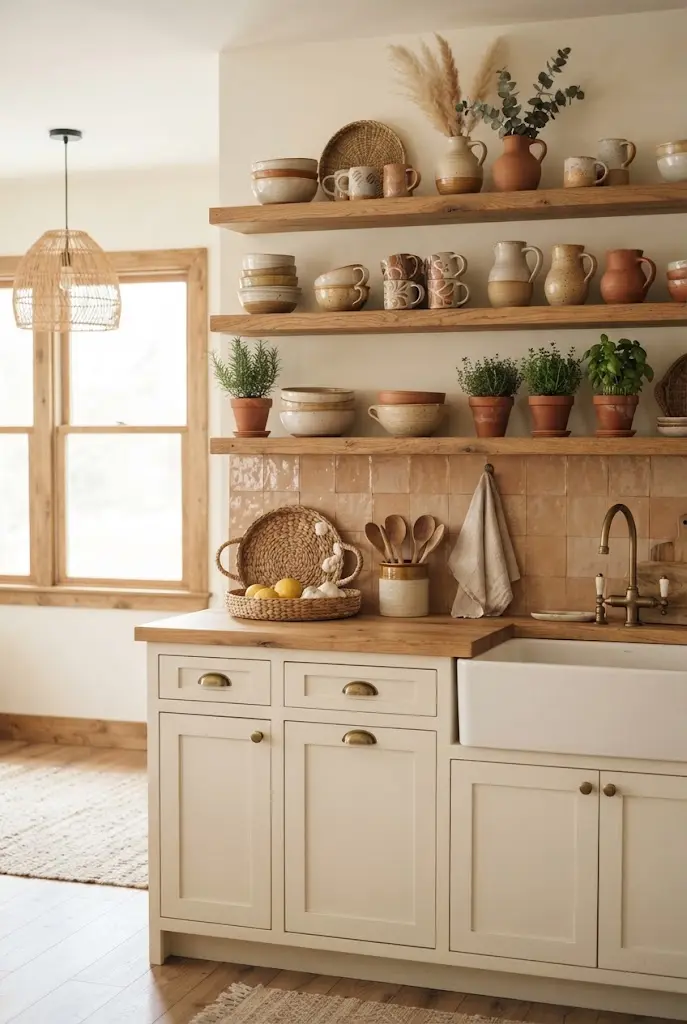
Handmade ceramic pieces bring an artisanal quality that is central to boho-inspired decorating. Choose irregular bowls, textured mugs, handmade pitchers, serving plates, and decorative vases. Neutral ceramic finishes such as cream, beige, clay, and soft brown work especially well with farmhouse interiors. Display a few pieces on open shelves or place a large ceramic vessel on the kitchen island. Slight variations in shape and glaze can make the kitchen feel more authentic. Avoid arranging everything too perfectly because relaxed styling suits this aesthetic. Handmade pottery also works as functional decor, allowing beautiful objects to remain useful. Combine ceramics with wood and woven materials for a balanced natural look. Small ceramic planters can bring greenery into the room as well. This approach gives a kitchen personality without relying on bright colors. The overall effect is warm, artistic, and comfortable.
9. Decorate With Indoor Plants
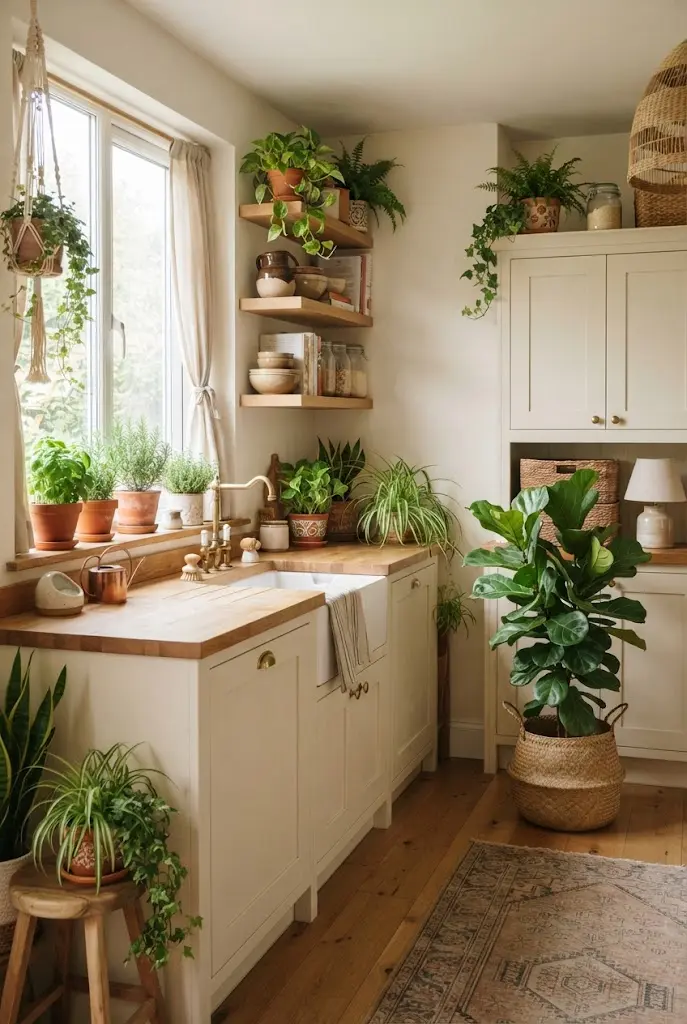
Plants are one of the simplest ways to make a farmhouse boho kitchen feel fresh and inviting. Herbs such as basil, rosemary, mint, and thyme can provide both decoration and practical value. Larger plants can be placed in woven baskets near a sunny window or on an open shelf. Choose simple terracotta, ceramic, or natural woven planters to match the overall style. Green foliage creates a beautiful contrast against cream walls and wooden cabinets. Hanging plants can also soften open shelving or empty corners. Avoid overcrowding the kitchen with greenery because too many plants can interfere with practical workspace. Use different heights and leaf shapes to create visual interest. Natural plants reinforce the organic character of both farmhouse and boho decorating. They can also make a kitchen feel more connected to the outdoors. This idea works in homes of almost any size.
10. Choose Terracotta Accents
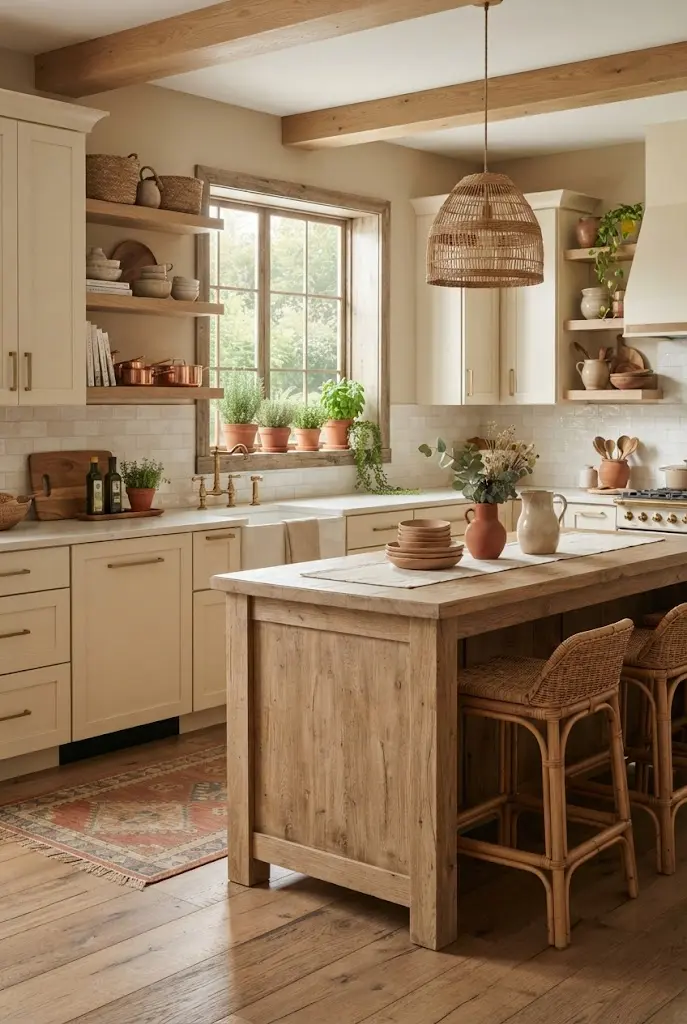
Terracotta adds earthy warmth to a farmhouse boho kitchen without overwhelming a neutral color scheme. The natural clay tone works particularly well with cream, beige, white, wood, and sage green. You can introduce terracotta through planters, serving bowls, tiles, vases, or small decorative accessories. A few carefully placed pieces can create enough color to make the kitchen feel warmer. Terracotta tiles can also be used for a backsplash or floor when a stronger design statement is desired. If you prefer a subtle approach, choose small pottery pieces instead. The earthy tone works beautifully with natural wood and woven textures. It also gives the kitchen a slightly Mediterranean or Southwestern influence while remaining compatible with farmhouse styling. Keep the rest of the palette restrained so the terracotta accents remain noticeable. This is an easy way to add boho personality without changing the entire kitchen.
11. Install a Textured Backsplash
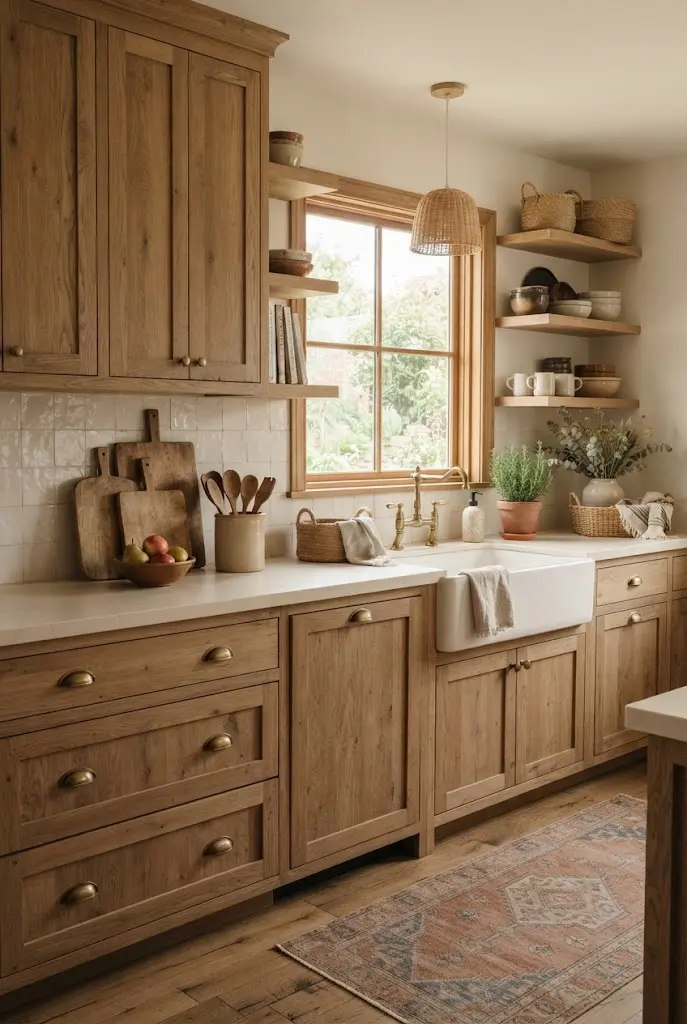
A textured backsplash can add visual depth without requiring bold colors. Handmade-look ceramic tiles, zellige-style tiles, softly irregular subway tiles, or natural stone can work beautifully in a farmhouse boho kitchen. Cream and warm white tiles provide a timeless background for wooden cabinets and colorful accessories. Slight variations in texture make the wall more interesting under natural light. Pair the backsplash with simple hardware so the overall design remains relaxed. Natural stone can provide an even more rustic appearance. If you want stronger bohemian character, consider a muted earthy tile pattern. Keep patterns limited to one main area to prevent visual clutter. The backsplash can become a subtle focal point behind the stove or sink. This approach balances farmhouse simplicity with boho texture. It is particularly suitable for homeowners who want personality without a highly colorful kitchen.
12. Add a Rustic Kitchen Island
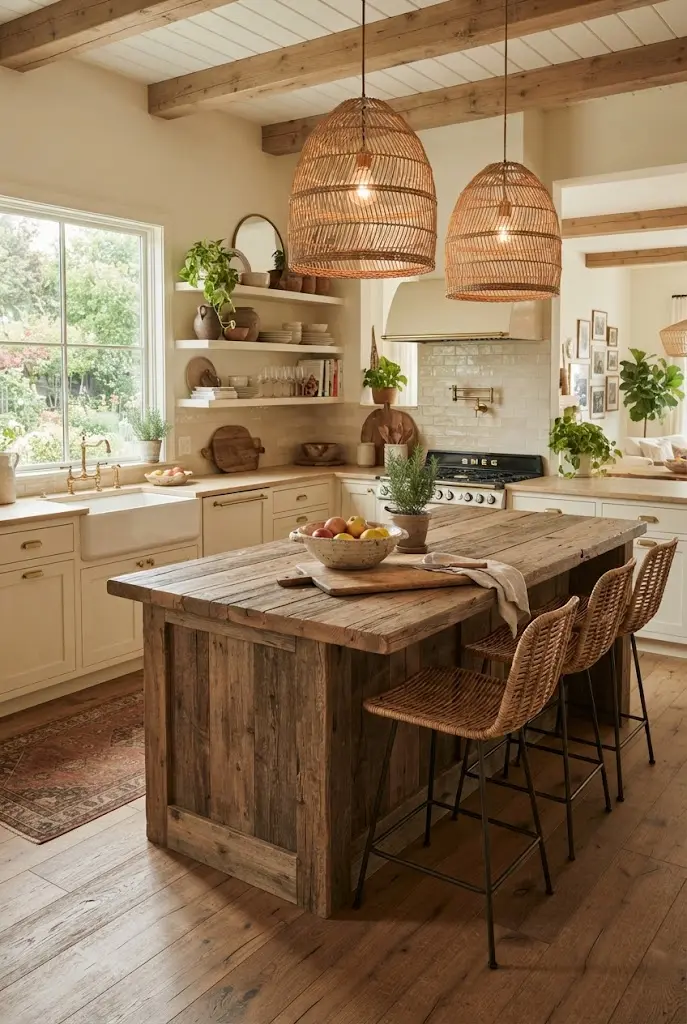
A rustic kitchen island can serve as the central gathering point in a farmhouse boho kitchen. Choose reclaimed wood, painted wood, or a combination of wood and stone for an authentic appearance. The island can provide additional preparation space, seating, and storage. Open shelving underneath can hold baskets, cookbooks, or attractive cookware. Add woven counter stools to bring in boho texture. Keep the island slightly different from the perimeter cabinets if you want a collected, custom-designed appearance. A large wooden cutting board and ceramic bowl can provide simple countertop styling. Pendant lighting above the island can complete the focal point. The design should feel practical rather than overly formal. In an American open-plan home, the island can also visually connect the kitchen to the dining and living areas. This makes it both a design feature and an everyday workspace.
13. Layer Natural Textiles
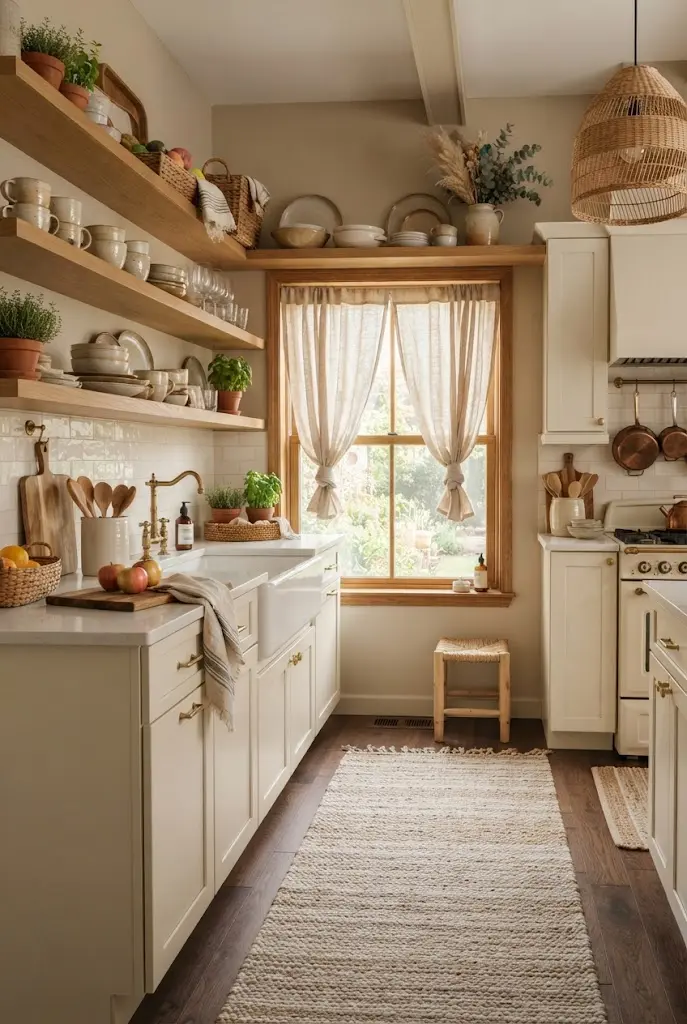
Textiles can soften the hard surfaces commonly found in kitchens. Use cotton runners, linen towels, woven potholders, natural-fiber rugs, and relaxed fabric curtains to add warmth. Neutral textiles with subtle stripes or earthy patterns can provide boho character without making the room feel busy. A vintage-style runner placed near the sink can visually define the work area. Linen curtains can soften bright windows while allowing natural light into the room. Choose materials that are practical enough for everyday kitchen use. Natural fibers complement wood, ceramic, rattan, and stone beautifully. Mixing textures is more important than adding lots of colors. Small changes such as replacing standard towels with linen versions can noticeably affect the overall atmosphere. The kitchen will feel more comfortable and layered. This approach is especially useful for rental kitchens where major renovations may not be possible.
14. Use Black Hardware for Contrast
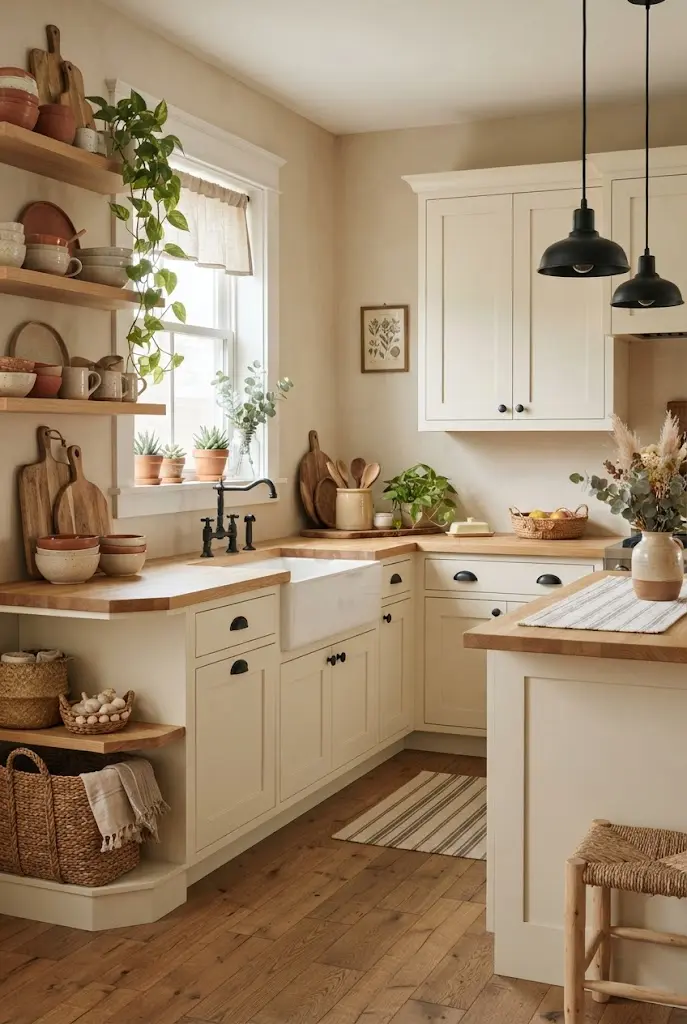
Black hardware can add definition to a soft farmhouse boho kitchen. Matte black cabinet pulls, drawer handles, faucets, and light fixtures create contrast against cream, white, beige, and natural wood surfaces. The dark details help prevent a neutral kitchen from looking flat. Choose simple shapes rather than highly ornate hardware to keep the design contemporary. Black accents also work well with rustic wood and woven accessories. You can repeat black in several small areas so the room feels visually connected. For example, black cabinet handles can coordinate with a pendant light and a few simple decorative frames. Avoid adding too much black because the farmhouse boho style generally benefits from warmth and softness. A restrained approach creates a balanced appearance. This idea works particularly well in modern American farmhouse kitchens. It provides a subtle update without changing the entire room.
15. Display Wooden Cutting Boards
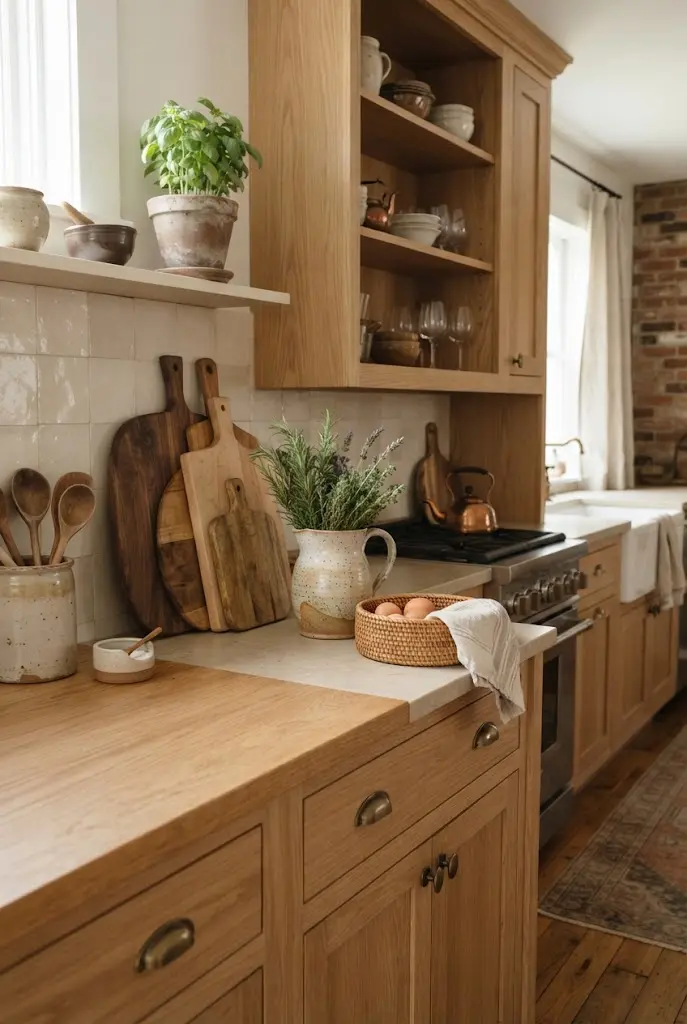
Wooden cutting boards are practical kitchen tools that can double as farmhouse boho decor. Instead of storing them inside cabinets, lean several boards against the backsplash or arrange them vertically on an open shelf. Choose boards in different sizes and natural wood tones to create visual variation. Their organic shapes add warmth to kitchens dominated by straight cabinet lines. Pair them with ceramic pitchers, woven baskets, or small plants. Avoid overcrowding the counter because the goal is to create a casual but intentional display. Wooden boards can also make a new kitchen feel more rustic and established. Reclaimed or handcrafted versions can add even more personality. They are especially effective against cream or white backsplashes. This small decorating trick requires little effort while reinforcing the farmhouse character. It also keeps frequently used boards within easy reach.
16. Create a Cozy Breakfast Nook
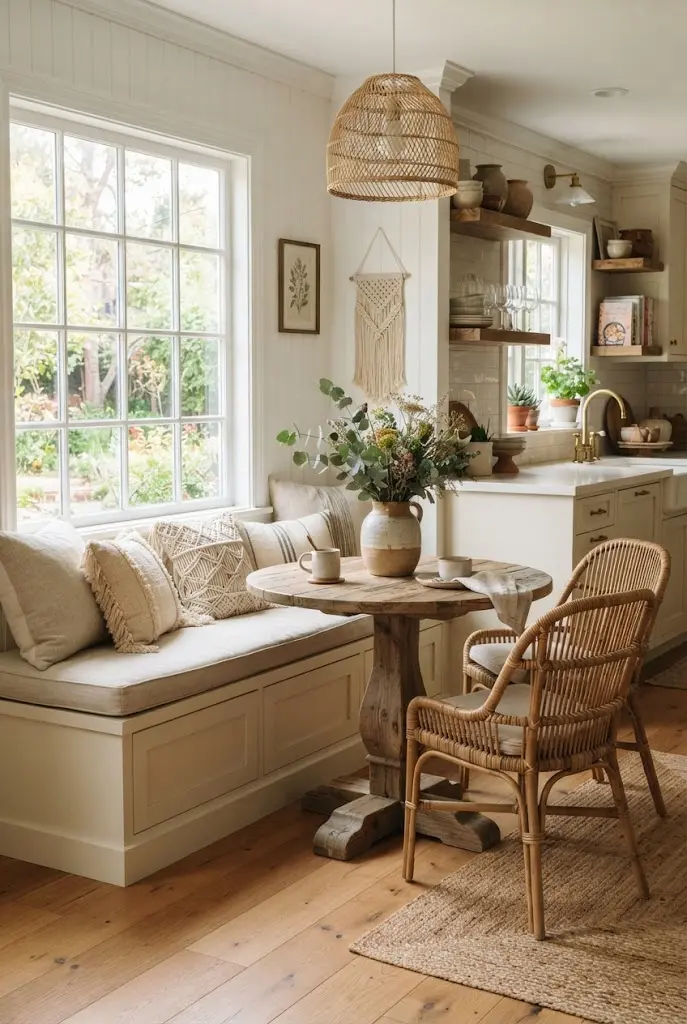
A breakfast nook can make a farmhouse boho kitchen feel more relaxed and functional. Place a small wooden table near a window and pair it with a simple bench or woven chairs. Add cushions in linen, cotton, or subtle earthy patterns for comfort. A pendant light above the table can define the dining area visually. Decorate the tabletop with a ceramic vase, small plant, or wooden serving board. Natural sunlight can make the nook especially inviting during mornings. Built-in bench seating can provide useful storage underneath in smaller American homes. Keep the color palette connected to the kitchen so the nook feels like part of the same space. A slightly vintage table can strengthen the farmhouse character. Boho-inspired textiles can provide softness and personality. The finished nook becomes a comfortable spot for coffee, breakfast, reading, or casual meals.
17. Incorporate Exposed Wooden Beams
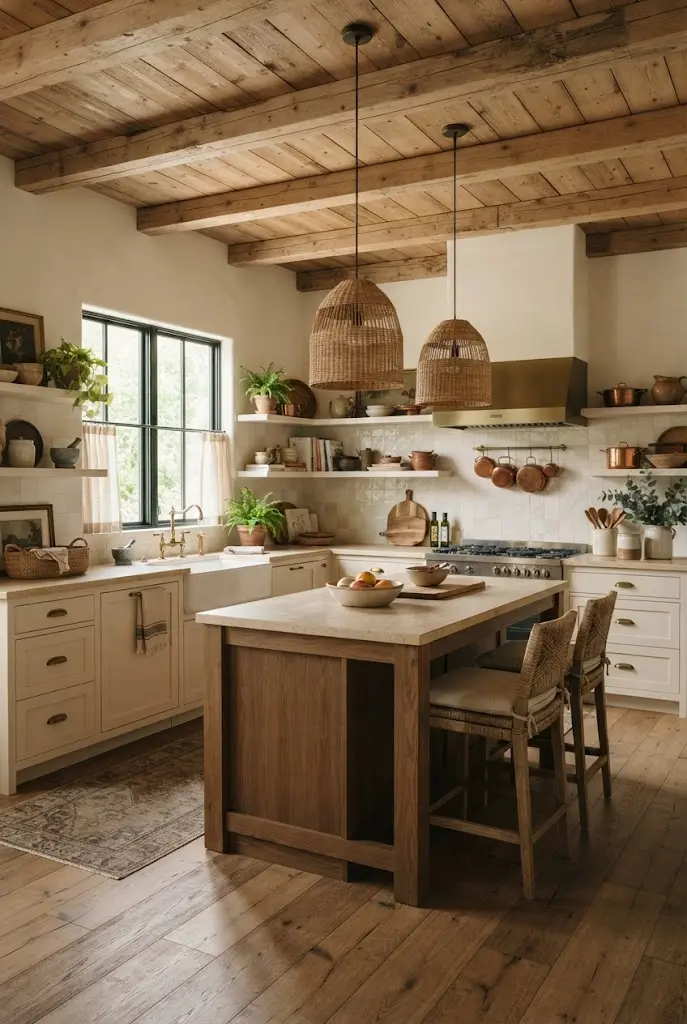
Exposed wooden beams can give a kitchen strong architectural farmhouse character. If your home already has beams, emphasize their natural texture rather than covering them with heavy finishes. In newer homes, decorative beams can sometimes create a similar visual effect when appropriately installed. Pair darker beams with warm cream walls and lighter cabinetry for contrast. Natural wood shelves and woven lighting can repeat the material throughout the room. Keep other decorative elements relatively simple so the beams remain an important feature. The boho influence can come through ceramics, plants, textiles, and collected accessories. This combination creates a rustic foundation without making the room feel old-fashioned. Large beams can also visually define an open-plan kitchen. Warm lighting will highlight the wood grain in the evening. The result can feel architectural, cozy, and naturally layered.
18. Style a Coffee Station
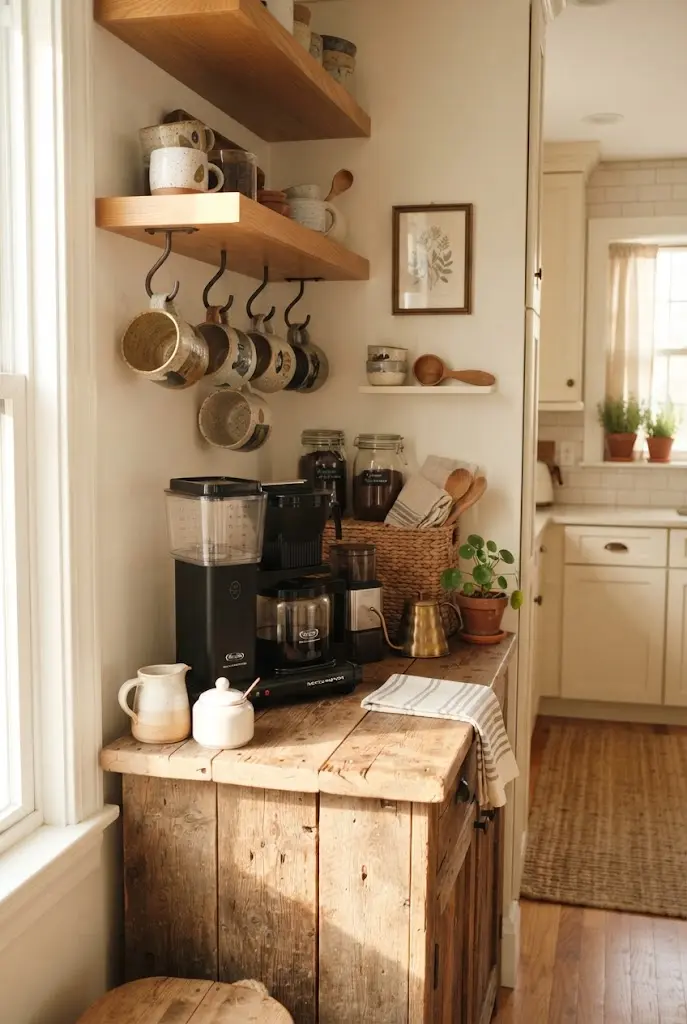
A dedicated coffee station can add both personality and convenience to a farmhouse boho kitchen. Use a small section of counter space or a compact wooden cabinet to create the station. Display mugs on hooks, arrange coffee jars on an open shelf, and add a small ceramic container for spoons. Natural wood and handmade ceramics work especially well here. A woven basket can hold extra supplies while keeping the area organized. Add a small plant or dried botanical arrangement for a decorative touch. Keep the color palette consistent with the rest of the kitchen. Vintage-style coffee accessories can strengthen the farmhouse atmosphere. The station can become a cozy morning ritual area without taking much space. This idea is particularly practical for busy American households. A thoughtfully styled coffee corner can make the kitchen feel more personalized.
19. Use Dried Botanical Arrangements
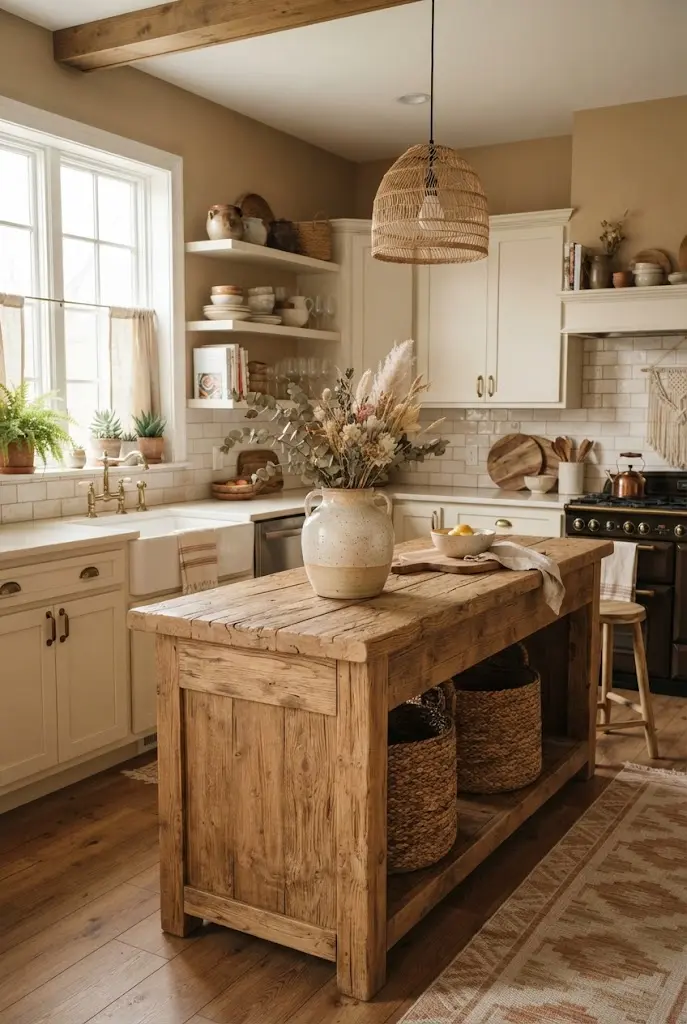
Dried botanicals can add boho texture while keeping the farmhouse kitchen natural and understated. Pampas grass, dried wheat, eucalyptus, palm leaves, or simple dried branches can be displayed in ceramic or glass vessels. Choose arrangements that complement the kitchen rather than dominating it. Neutral dried grasses work especially well with cream cabinets and natural wood. Place a small arrangement on the island or dining table. Larger branches can fill an empty corner or open shelf. Their muted colors provide texture without requiring bright floral colors. Dried botanicals also fit the collected and relaxed spirit of bohemian decorating. Combine them with woven baskets and handmade pottery for a cohesive appearance. Keep arrangements away from cooking surfaces and heat sources for practical reasons. This is an easy seasonal decorating idea that can be changed throughout the year.
20. Mix Modern and Rustic Elements
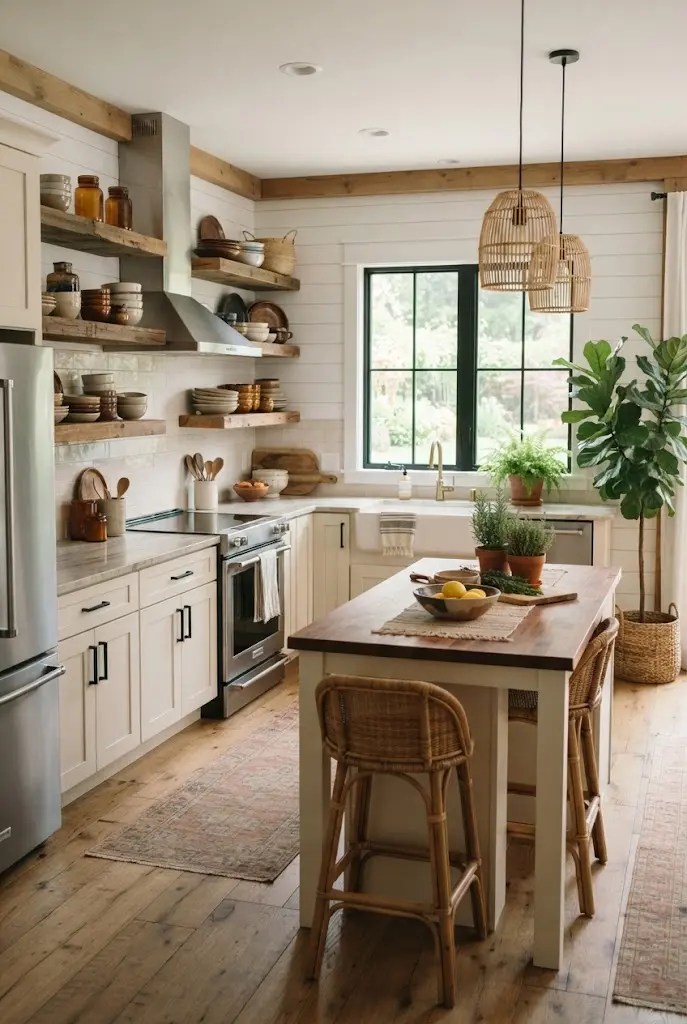
A successful farmhouse boho kitchen does not have to be completely traditional. Mixing modern appliances and clean surfaces with rustic materials can create a balanced, updated appearance. For example, sleek stainless-steel appliances can sit alongside reclaimed wood shelves and handmade ceramics. Simple shaker cabinets can provide a traditional foundation while modern lighting introduces a contemporary touch. Boho accessories such as woven baskets and plants can soften the combination. Keep the main architectural elements relatively simple so different styles do not compete. Natural materials can act as the bridge between modern and rustic pieces. This approach is particularly useful in recently built American homes. You can enjoy current kitchen functionality while maintaining a warm visual character. The result feels practical rather than themed. Small vintage details can make the modern elements feel more integrated.
21. Add a Woven Kitchen Rug
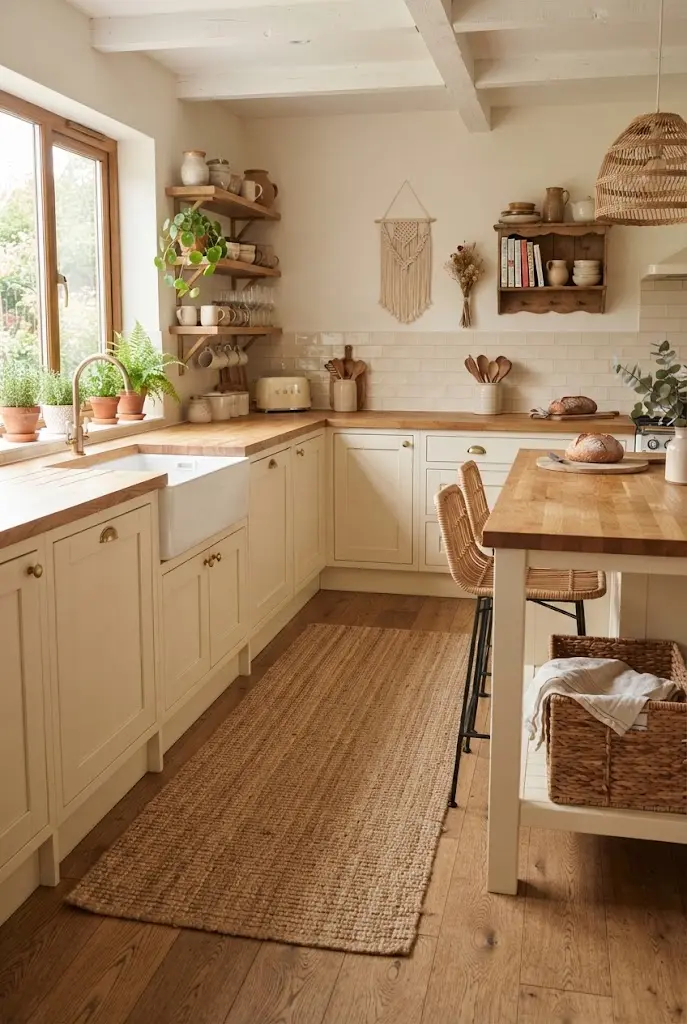
A woven kitchen rug can introduce comfort and texture while visually defining a work area. Natural jute, cotton, wool, or flat-weave rugs can work well with farmhouse boho interiors. Choose neutral colors or subtle geometric patterns that complement the surrounding cabinetry. Place the rug near the sink, island, or main preparation area where it can provide softness underfoot. A slightly vintage-inspired pattern can add bohemian personality. Make sure the rug is practical for kitchen use and easy to clean. Pair it with wooden cabinets and woven storage baskets for a coordinated natural-material look. Avoid overly bright patterns if you want a calm farmhouse atmosphere. A rug can also make a large open kitchen feel more layered. This simple addition can make the room feel more comfortable and finished. It is an easy update for renters and homeowners alike.
22. Add Open Storage Baskets
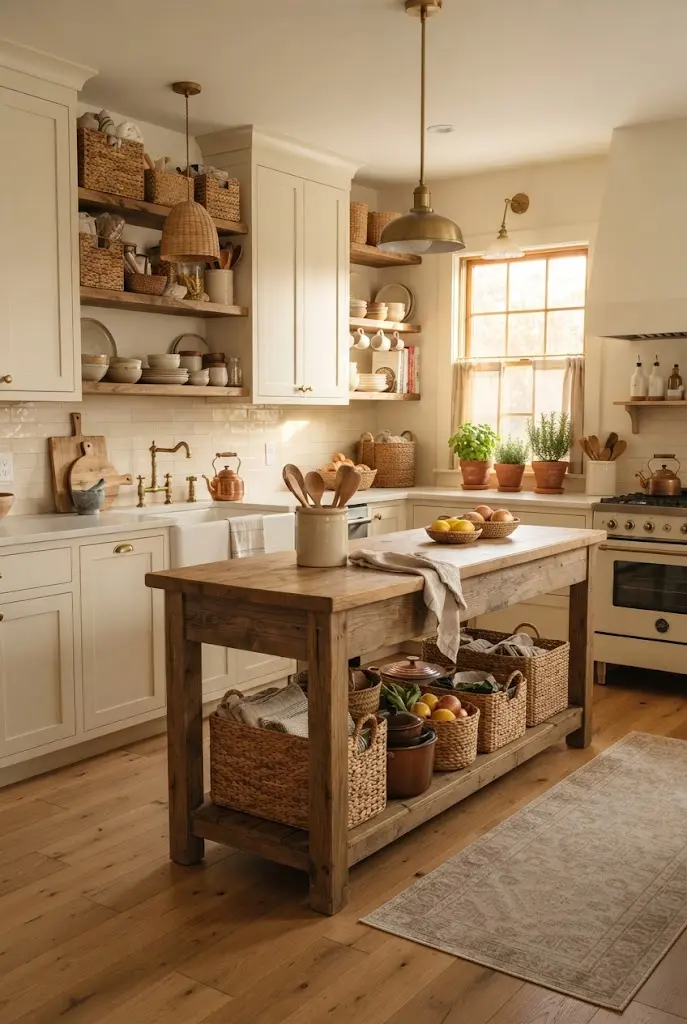
Woven baskets provide attractive storage while reinforcing the natural character of a farmhouse boho kitchen. Use them on open shelves, inside lower shelving, or beneath a kitchen island. They can store towels, produce, linens, cookbooks, or less attractive everyday items. Choose baskets made from rattan, seagrass, jute, or other natural fibers. Different basket sizes can add visual variation while keeping the overall appearance cohesive. Combine them with wood and ceramic accessories for a layered display. Open baskets are especially useful in kitchens where additional closed storage is limited. Their texture can soften the appearance of cabinets and countertops. Keep frequently used items in easily accessible baskets. Avoid excessive matching so the kitchen maintains a collected boho feel. Practical storage can therefore become part of the decoration.
23. Create a Cozy Window Herb Garden
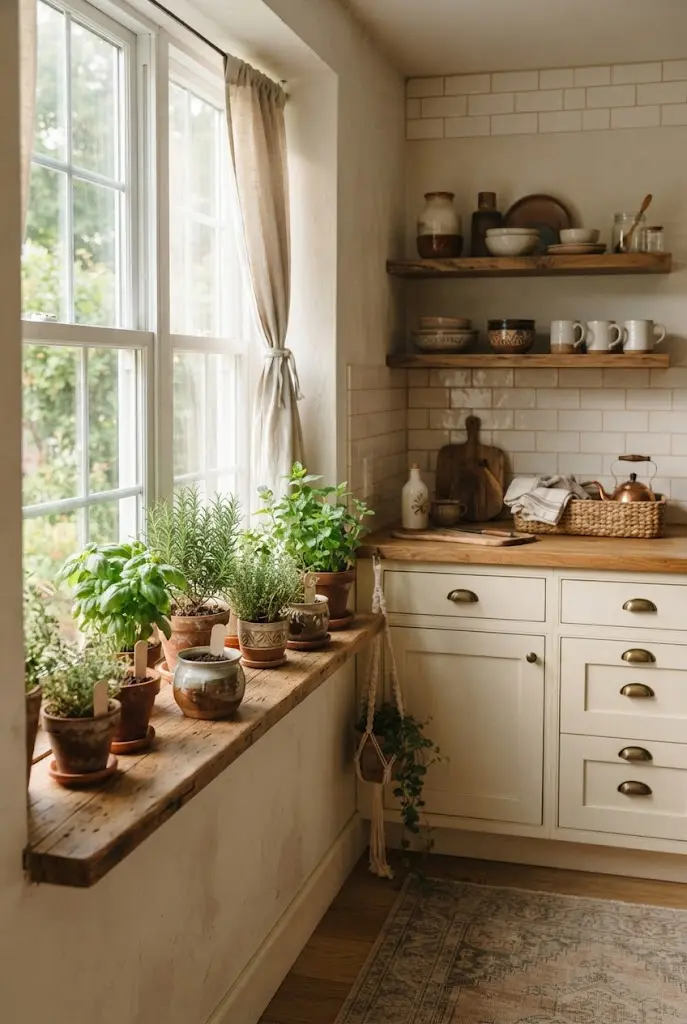
A sunny kitchen window is an ideal place for a small herb garden. Basil, rosemary, thyme, oregano, and mint can provide fresh ingredients while adding natural greenery. Use matching terracotta pots or handmade ceramic planters to maintain the farmhouse boho aesthetic. A simple wooden shelf beneath the window can provide additional space for plants. Keep the arrangement organized so it does not interfere with the sink or food preparation area. The green foliage looks beautiful against warm neutral walls. Small handwritten-style plant labels can be used if desired, although the overall display should remain simple. Natural sunlight can make the plants an attractive focal point during the day. This idea connects the kitchen with gardening and outdoor living. It also introduces a useful element rather than purely decorative objects. Even a tiny window can support a few kitchen herbs.
24. Layer Warm Lighting for Evening Coziness
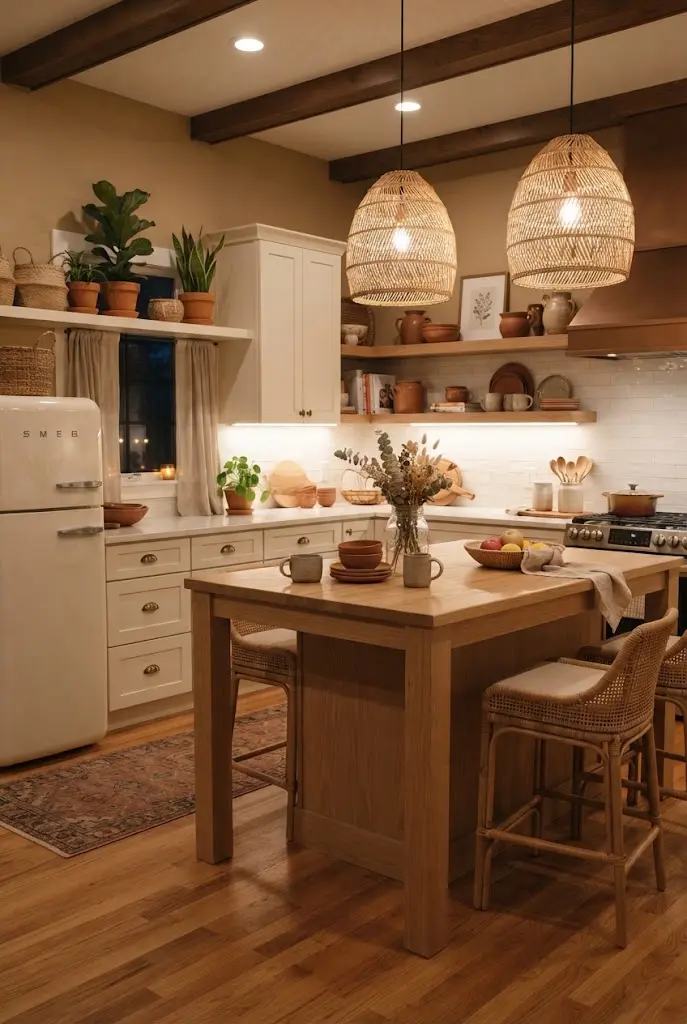
Warm layered lighting can transform a farmhouse boho kitchen after sunset. Combine pendant lights, under-cabinet lighting, wall sconces, and smaller decorative lamps where appropriate. Choose warm-toned bulbs to create a softer atmosphere than cool white lighting. Woven shades can add texture while aged brass or black fixtures can introduce subtle contrast. Under-cabinet lighting is useful for food preparation while pendants can illuminate an island or dining area. Decorative lighting should complement the natural materials already present in the room. Avoid relying on one bright ceiling fixture because layered illumination creates more depth. Soft evening light can highlight wood grain, ceramics, woven baskets, and textured walls. This makes the kitchen feel more comfortable when the family gathers after dinner. The combination of practical and ambient lighting is both functional and decorative. It provides a finished touch to a cozy farmhouse boho kitchen.